
When medical devices fail, lives hang in the balance. A pacemaker malfunction, a glucose monitor displaying incorrect readings, or a surgical robot experiencing electrical interference—these aren’t just technical problems. They’re potential catastrophes that underscore why medical device manufacturing demands the most rigorous quality standards in any industry.
For PCB manufacturers serving the medical sector, ISO 13485 represents more than a certification—it’s a comprehensive framework ensuring that every flexible circuit, every solder joint, and every trace carries the reliability that medical applications demand. At Flex Plus (Xiamen) Co., Ltd, we’ve witnessed how this standard transforms manufacturing processes, elevating quality from aspiration to guarantee.
Understanding ISO 13485: The Foundation of Medical Device Quality
ISO 13485 is an internationally recognized quality management system standard specifically designed for organizations involved in the design, production, installation, and servicing of medical devices. Unlike general quality standards, ISO 13485 addresses the unique requirements of medical device manufacturing, where product failure can directly impact patient safety.
The standard establishes a comprehensive quality management framework that spans the entire lifecycle of medical devices—from initial design concepts through manufacturing, distribution, and post-market surveillance. For PCB manufacturers, this means implementing systematic controls that ensure consistent quality, traceability, and regulatory compliance at every production stage.
What makes ISO 13485 particularly relevant for PCB manufacturing is its emphasis on risk management and process validation. Medical device PCBs often operate in critical applications where environmental conditions, mechanical stress, and electrical performance must meet exacting specifications. A cardiac monitor’s flexible PCB must function reliably through thousands of bending cycles. An insulin pump’s circuit board must withstand years of continuous operation without degradation. ISO 13485 provides the framework to ensure these performance requirements are consistently met.
The standard works in conjunction with ISO 14971, which specifically addresses risk management in medical devices. Together, these standards create a comprehensive approach where manufacturers identify potential hazards, evaluate risks, implement controls, and continuously monitor effectiveness. For a medical device PCB manufacturer, this means conducting failure mode and effects analysis (FMEA) during design reviews, implementing process controls that mitigate identified risks, and maintaining documentation that demonstrates due diligence throughout the product lifecycle.

ISO 13485 Application in PCB Manufacturing: From Design to Delivery
The application of ISO 13485 in PCB manufacturing extends across every phase of production, creating a seamless quality management system that begins before the first design sketch and continues long after products reach customers.
During the design phase, ISO 13485 requires manufacturers to establish formal design controls that transform customer requirements into manufacturing specifications. For flexible PCB applications in medical devices, this means documenting design inputs—such as bend radius requirements for wearable medical monitors or temperature cycling specifications for implantable device circuits. Design outputs must be verifiable, traceable to inputs, and subject to formal design review processes involving cross-functional teams.
Production planning under ISO 13485 demands detailed process documentation that leaves nothing to chance. When manufacturing a multilayer rigid-flex PCB for a surgical robot, every step—from copper etching parameters to lamination pressure profiles—must be documented, validated, and controlled. The standard requires manufacturers to establish process validation protocols proving that production methods consistently achieve predetermined results.
Testing and inspection procedures must be comprehensive and documented. Unlike consumer electronics where sampling might suffice, medical device PCBs often require 100% electrical testing, automated optical inspection (AOI), and X-ray examination to verify internal layer alignment in multilayer constructions. Each test result must be recorded, traceable to specific production lots, and retained according to regulatory requirements.
Post-production activities continue the quality management thread. ISO 13485 mandates systems for handling customer complaints, managing non-conforming products, and implementing corrective and preventive actions (CAPA). When a medical device manufacturer reports a potential issue with flexible circuits in wearable glucose monitors, the PCB manufacturer must investigate systematically, determine root causes, implement corrections, and verify effectiveness—all while maintaining detailed documentation.
The relationship between ISO 13485 and ISO 14971 becomes particularly important during production planning. Risk management isn’t a one-time design activity but an ongoing process that influences production decisions. If risk analysis identifies potential solder joint failures in high-vibration environments, production controls must include validated soldering processes, regular equipment calibration, and operator training protocols that specifically address this risk.
Key Clauses: The Building Blocks of Compliant PCB Manufacturing
Several ISO 13485 clauses directly impact how PCB manufacturers structure their operations, creating the foundation for consistent quality delivery.
Document Control forms the bedrock of ISO 13485 compliance. In PCB manufacturing, this means maintaining current versions of customer drawings, internal work instructions, material specifications, and quality records. When a medical device manufacturer requests a design change to improve electromagnetic compatibility, document control systems ensure that updated specifications reach production floors immediately, obsolete versions are withdrawn, and change histories are maintained. At Flex Plus, our document control systems prevent the confusion that leads to manufacturing errors—ensuring that production teams always work from approved, current specifications.
Leadership and Commitment requirements ensure that quality management isn’t delegated to a single department but permeates the entire organization. Management must establish quality policies, define organizational roles and responsibilities, and ensure adequate resources are available. This means quality decisions receive executive attention and resources flow toward continuous improvement initiatives rather than being constrained by short-term cost pressures.
Resource Management addresses the human, infrastructural, and environmental resources necessary for consistent quality. For PCB manufacturing, this includes maintaining cleanroom environments for sensitive operations like gold plating on ultra-thin flexible circuits, ensuring production equipment receives preventive maintenance, and verifying that operators receive training appropriate to their roles. When manufacturing TPU circuits for wearable medical devices, environmental controls become critical—temperature and humidity variations can affect material properties and dimensional stability.
Product Realization clauses detail how customer requirements transform into finished products. This encompasses design and development controls, purchasing controls, production and service provision, and control of monitoring and measuring equipment. For a medical PCB manufacturer, product realization means establishing processes that maintain control from the moment polyimide substrates arrive at receiving through final electrical testing and packaging.
Purchasing Controls deserve particular attention in PCB manufacturing, where material quality directly impacts product performance. ISO 13485 requires manufacturers to evaluate suppliers based on their ability to meet requirements, establish criteria for supplier selection and monitoring, and verify purchased materials conform to specifications. When sourcing medical-grade polyimide for flexible circuits in implantable devices, purchasing controls ensure that materials meet biocompatibility requirements, come from qualified suppliers, and include documentation proving material pedigree.
Production and Service Provision controls ensure manufacturing processes remain under control and consistently produce conforming products. This includes establishing controlled conditions for manufacturing—such as cleanroom classifications for critical operations, temperature and humidity specifications for material storage, and lighting requirements for visual inspection. Process validation proves that production methods achieve intended results before full-scale production begins.
Measurement, Analysis, and Improvement clauses require manufacturers to monitor quality system effectiveness, analyze data to identify improvement opportunities, and implement corrective actions when problems arise. For PCB manufacturers, this means establishing key performance indicators (KPIs) such as first-pass yield rates, on-time delivery performance, and customer complaint trends. When data reveals increasing defect rates in a specific process, ISO 13485 requires systematic investigation, root cause determination, corrective action implementation, and effectiveness verification.
Traceability and Identification: Following Every Circuit’s Journey
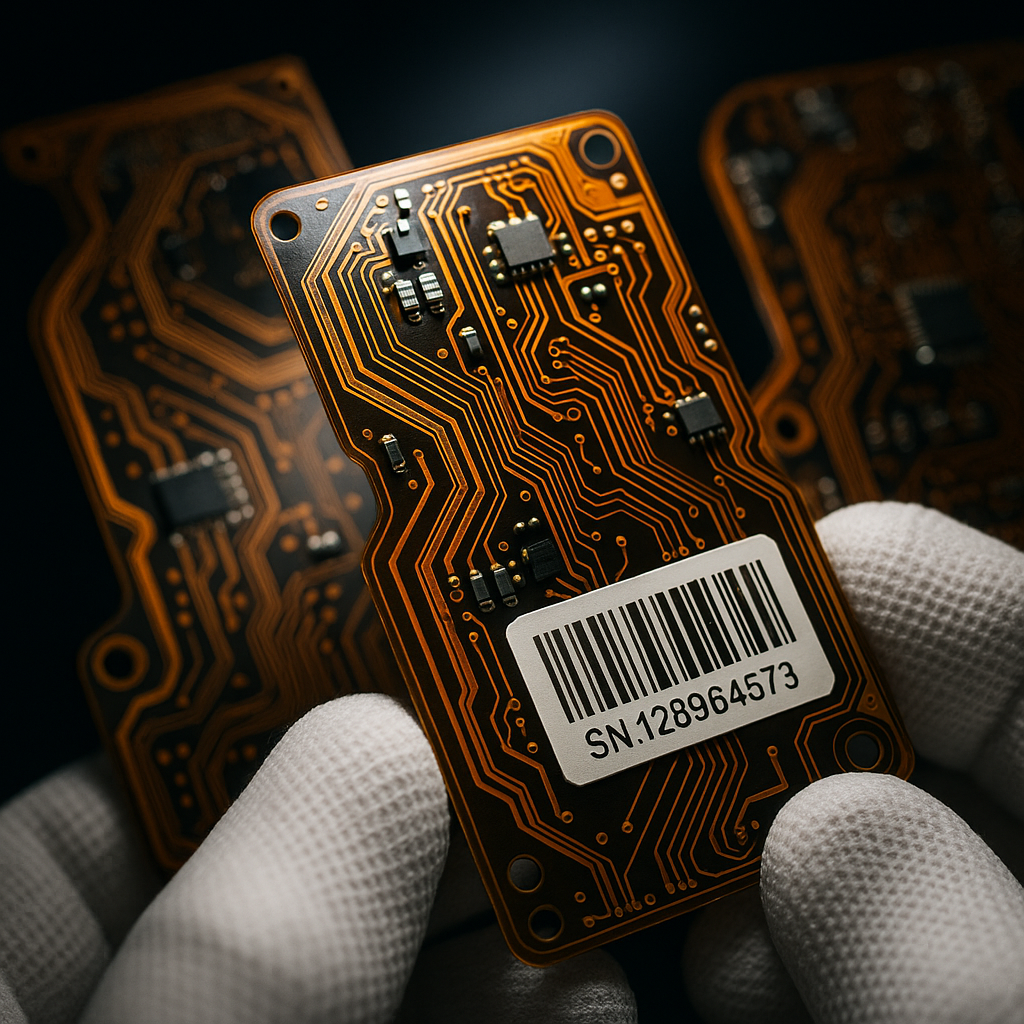
In medical device manufacturing, traceability isn’t just good practice—it’s a regulatory requirement that can determine whether a single defective component affects ten devices or ten thousand. ISO 13485 establishes comprehensive traceability requirements that allow manufacturers to track products throughout their lifecycle.
Unique Identification begins with assigning lot numbers or serial numbers to production batches. When manufacturing flexible circuits for cardiac monitors, each production panel receives a unique identifier linking it to specific raw materials, production dates, operator assignments, equipment used, and process parameters employed. This identification follows products through every manufacturing stage—from raw material receiving through final testing and shipment.
Material Traceability extends backward through the supply chain. For medical PCBs, this means maintaining records that connect finished products to specific lots of polyimide substrate, copper foil, adhesives, and surface finishes. When a substrate supplier issues a quality notice affecting material produced during a specific timeframe, comprehensive traceability systems allow manufacturers to identify all potentially affected production lots immediately, assess risk, and implement appropriate controls before products reach customers.
At Flex Plus, our traceability systems maintain lot-specific records for every critical material. When manufacturing rigid-flex PCBs for surgical robotics, we document the pedigree of not just flexible substrates and FR-4 rigid sections, but also stiffeners, coverlay materials, and even the solder mask formulations used. This comprehensive approach ensures that if quality issues emerge, we can trace them to their source quickly and implement targeted corrections.
Recording Test Results creates an additional traceability dimension. Every electrical test, every AOI inspection, every dimensional verification generates data linked to specific production units. For a multilayer flexible circuit in a patient monitoring system, test records document electrical continuity, insulation resistance, impedance measurements, and any rework performed. These records remain accessible throughout the product’s lifecycle, supporting customer quality investigations and regulatory inquiries.
Rework History must be meticulously documented. When a flexible PCB requires repair—perhaps replacing a defective component during assembly or touching up a surface finish—ISO 13485 requires documentation of what was reworked, why it was necessary, who performed the rework, and what verification confirmed successful completion. This history becomes part of the product’s permanent record, providing transparency about any deviation from normal production flow.
The practical impact of traceability became evident in a real-world scenario where a medical device manufacturer discovered electromagnetic interference affecting a subset of their devices. With comprehensive traceability, the root cause was quickly isolated to a specific lot of flexible circuits where a copper weight specification had been inadvertently processed incorrectly. Because detailed records linked serial numbers to production parameters, the affected population was precisely identified, minimizing both patient risk and business disruption.
Production and Service Provision: Creating Controlled Manufacturing Environments
ISO 13485‘s requirements for production and service provision establish the controlled conditions necessary for consistent quality in medical device PCB manufacturing.
Controlled Environments start with defining and maintaining appropriate conditions for each manufacturing operation. For flexible PCB production, this means establishing cleanroom classifications for operations susceptible to particulate contamination—such as gold plating on ultra-thin flexible circuits where even microscopic particles can cause defects. Temperature and humidity controls prevent dimensional variations in hygroscopic materials like polyimide. Lighting specifications ensure that operators can detect subtle defects during visual inspection.
At Flex Plus, our 16,000+ square meter facility includes environmentally controlled zones tailored to specific manufacturing requirements. When producing TPU circuits for medical wearables, temperature control becomes critical because thermoplastic polyurethane exhibits significant dimensional changes with temperature variation. Our controlled environments maintain tight tolerances that ensure consistent material behavior throughout processing.
Process Validation proves that manufacturing methods achieve intended results consistently and predictably. For new PCB designs or processes, validation involves conducting production trials under normal operating conditions, collecting data proving that specifications are consistently met, and documenting results before full-scale production begins. This validation extends to every critical parameter—from lamination pressures that bond rigid and flexible sections in rigid-flex constructions to reflow temperature profiles that ensure reliable solder joints in assembled circuits.
Three levels of validation apply to different processes:
Installation Qualification (IQ) verifies that equipment is installed correctly and operates according to specifications. When installing new lamination presses for rigid-flex PCB production, IQ documentation proves that temperature zones reach specified setpoints, pressure systems achieve required force, and control systems function as intended.
Operational Qualification (OQ) demonstrates that equipment performs as expected across its operating range. OQ for lamination presses might involve running test cycles at different temperatures and pressures, measuring actual versus target values, and proving that equipment maintains specifications consistently.
Performance Qualification (PQ) confirms that processes consistently produce conforming products under normal operating conditions. PQ involves manufacturing actual products, measuring critical characteristics, and demonstrating that specifications are consistently met across multiple production runs.
Handling and Packaging requirements ensure that products maintain their quality characteristics from manufacturing through delivery. Flexible PCBs face unique handling challenges—they can be damaged by excessive bending, contaminated by improper storage, or degraded by exposure to humidity. ISO 13485 requires manufacturers to establish handling procedures protecting products from these hazards, including appropriate packaging materials, environmental controls during storage, and transportation methods preventing damage.
For flexible circuits with ultra-thin constructions—such as our 25-micron double-sided flexible PCBs with gold plating—handling procedures become especially critical. Special carriers prevent excessive bending during processing, anti-static packaging protects against electrostatic discharge, and moisture barrier bags with desiccants prevent humidity absorption during storage and transit.
Implementation Roadmap: Achieving ISO 13485 Certification
For PCB manufacturers pursuing ISO 13485 certification, a structured implementation approach transforms the standard’s requirements into operational reality.
Gap Analysis forms the essential first step. This involves comparing current quality management practices against ISO 13485 requirements, identifying areas where systems fall short, and prioritizing improvements. A manufacturer might discover that while design controls exist informally, documentation doesn’t meet ISO 13485’s traceability requirements. Or purchasing controls might lack the supplier evaluation criteria that the standard mandates.
Process Mapping translates ISO 13485 clauses into specific manufacturing operations. Each quality management system section must connect to actual processes, responsibilities, and procedures. For PCB manufacturing, this means documenting how design inputs from customers translate into internal specifications, how production planning ensures validated processes are followed, how purchasing controls verify material quality, and how measurement and analysis identify improvement opportunities.
Risk Management Integration ensures that ISO 14971 requirements complement ISO 13485 quality management. This involves establishing formal risk management processes that identify potential hazards at each lifecycle stage, evaluate risk severity and likelihood, implement controls reducing risks to acceptable levels, and monitor control effectiveness. For flexible PCB manufacturing, risks might include dimensional instability affecting fit in medical device housings, copper thickness variations affecting electrical performance, or handling damage during assembly operations.
Documentation Development creates the quality management system’s written foundation. This encompasses quality manuals defining overall policy and structure, procedures detailing how specific processes are performed, work instructions providing step-by-step guidance for operators, and forms capturing quality records. Documentation must be comprehensive yet practical—detailed enough to ensure consistent execution but not so burdensome that it impedes efficient production.
Training and Competence ensures that personnel understand their roles in maintaining quality. ISO 13485 requires manufacturers to identify necessary competencies for personnel affecting product quality, provide training to achieve those competencies, evaluate training effectiveness, and maintain records of training provided. When implementing new controlled environment protocols for TPU circuit manufacturing, training must cover not just procedures but the underlying rationale—helping operators understand why environmental controls matter and how their actions impact product quality.
Internal Audits verify quality management system effectiveness before external auditors arrive. Internal auditors assess whether documented procedures are actually followed, identify non-conformances requiring correction, and evaluate whether the system achieves its intended objectives. These audits provide opportunities to address weaknesses before certification audits, increasing the likelihood of successful certification.
Management Review ensures that executive leadership remains engaged with quality management system performance. Regular management reviews examine audit results, customer feedback, process performance data, and improvement initiatives—allowing leadership to allocate resources toward priority improvements and maintain organizational focus on quality objectives.
Certification Audit Preparation involves selecting an accredited certification body, scheduling the audit, ensuring documentation is accessible and current, and briefing personnel on what to expect during the audit. The certification audit typically includes a documentation review phase verifying that procedures meet ISO 13485 requirements, followed by an on-site assessment observing actual practices and interviewing personnel.
Benefits of ISO 13485 Certification: Beyond Compliance
While ISO 13485 certification requires significant investment, the benefits extend far beyond regulatory compliance, creating competitive advantages that strengthen business performance.
Improved Product Quality emerges naturally from systematic quality management. By implementing comprehensive design controls, validated processes, and continuous improvement mechanisms, manufacturers reduce defect rates, increase first-pass yields, and deliver more consistent products. For medical device PCB customers, this translates to fewer quality issues, reduced inspection requirements, and greater confidence in supplier reliability.
Enhanced Supplier Reliability becomes a competitive differentiator in an industry where dependability determines whether manufacturers receive consideration for new projects. Medical device companies seeking PCB suppliers prioritize partners who demonstrate quality management maturity through certification, reducing their qualification burden and accelerating time-to-market for new products.
Better Market Access results from ISO 13485 recognition across global markets. Many countries accept ISO 13485 certification as evidence of quality management system adequacy, streamlining regulatory approval processes. For PCB manufacturers serving international medical device companies, certification removes barriers to market entry and enables participation in global supply chains.
Increased Regulatory Confidence strengthens relationships with customers facing stringent regulatory scrutiny. When medical device manufacturers undergo audits from regulatory authorities like the FDA or European notified bodies, their suppliers’ quality systems receive examination. ISO 13485 certification provides evidence that PCB suppliers maintain robust quality management, reducing regulatory concerns and supporting customers’ compliance efforts.
Operational Efficiency improvements often surprise manufacturers, who may view quality systems as bureaucratic overhead. In practice, systematic process documentation reduces variability and training time. Clear procedures prevent errors that would otherwise require costly rework. Supplier controls reduce incoming material defects. Data analysis identifies improvement opportunities that reduce waste and increase throughput. At Flex Plus, our ISO 13485-compliant processes have driven efficiency gains that benefit both quality and cost performance.
Common Pitfalls: Avoiding Implementation Challenges
Experience reveals several common challenges that trip up manufacturers pursuing ISO 13485 certification. Awareness of these pitfalls helps organizations avoid costly missteps.
Inadequate Integration into Daily Operations represents perhaps the most frequent failure mode. Some organizations view quality management systems as separate from “real work”—creating documentation that describes an idealized process while actual production follows different practices. This disconnect becomes apparent during certification audits when auditors observe practices that don’t match documented procedures. Successful implementation requires that quality management systems describe actual practices, and actual practices must conform to documented procedures.
Weak Traceability Scopes create vulnerability when quality issues arise. Some manufacturers implement traceability for finished products but fail to extend it throughout the supply chain or across all manufacturing operations. When a material defect affects product performance, inadequate traceability prevents quick identification of affected lots, forcing broad recalls that damage customer relationships and increase costs. Comprehensive traceability from raw materials through delivery provides protection against such scenarios.
Poor Change Control undermines quality management when manufacturers fail to maintain control over design changes, process modifications, or supplier changes. ISO 13485 requires formal change control procedures ensuring that changes are evaluated for impact, approved before implementation, and communicated to affected parties. When a customer requests a material substitution in a flexible PCB design, change control processes must evaluate whether the substitution affects electrical performance, mechanical properties, or regulatory status—preventing unintended consequences that emerge only after products reach the field.
Insufficient Documentation for Audits creates obstacles during certification audits. Some manufacturers implement excellent practices but fail to maintain records proving their effectiveness. ISO 13485 emphasizes “if it isn’t documented, it didn’t happen”—requiring objective evidence that processes were performed and specifications were met. Establishing robust documentation practices that capture evidence without creating excessive burden requires thoughtful system design and appropriate technology support.
Neglecting Continuous Improvement treats ISO 13485 as a one-time certification goal rather than an ongoing commitment to quality excellence. While achieving initial certification requires substantial effort, maintaining certification demands continuous attention to performance monitoring, corrective action implementation, and system enhancement. Organizations that view certification as a destination rather than a journey struggle to maintain quality management system vitality and eventually face challenges during surveillance audits.
Flex Plus Commitment: Certified Excellence in Medical PCB Manufacturing
At Flex Plus (Xiamen) Co., Ltd, ISO 13485 certification represents more than regulatory compliance—it embodies our commitment to delivering medical device PCB solutions that meet the most demanding quality requirements. Our 20+ years of flexible PCB manufacturing experience combines with certified quality management systems that provide customers with confidence their products will perform reliably in critical medical applications.
Our ISO 13485 certification complements our comprehensive portfolio of quality standards, including ISO 9001 for general quality management, IATF 16949 for automotive applications, and ISO 14001 for environmental responsibility. This multi-standard certification approach demonstrates our capability to serve diverse industries with specialized quality requirements—whether manufacturing flexible circuits for electric vehicle battery management systems requiring IATF 16949 compliance or medical wearable PCBs demanding ISO 13485 rigor.
Our end-to-end manufacturing control eliminates the quality risks associated with outsourcing or broker relationships. From material receiving through final inspection, every operation occurs within our 16,000+ square meter facility under direct supervision of experienced production engineers. This integrated approach enables comprehensive traceability, consistent process control, and rapid response when customers require engineering support or quality investigations.
Our technical capabilities align perfectly with medical device requirements. Ultra-thin flexible circuits down to 25 microns serve implantable medical devices where miniaturization is critical. Rigid-flex PCBs reduce connector counts and increase reliability for surgical robots and diagnostic equipment. TPU circuits provide biocompatible solutions for wearable health monitors and smart medical textiles. Each technology platform operates under ISO 13485-compliant processes ensuring medical-grade quality.
Our commitment to innovation drives continuous improvement in both manufacturing capabilities and quality systems. We don’t view ISO 13485 as constraining innovation but rather as a framework enabling us to develop breakthrough technologies—like our flexible heat dissipation flow channels and transparent PCB technology—while maintaining the rigorous controls that medical applications demand.
For medical device manufacturers seeking a PCB partner combining technical excellence with certified quality management, Flex Plus offers the unique combination of advanced manufacturing capabilities, comprehensive certification portfolio, and proven track record serving the global medical device industry. Our ISO 13485 certification isn’t just a certificate on the wall—it’s a daily commitment to the quality, reliability, and traceability that medical device PCBs demand, supporting our customers’ missions to improve patient outcomes through innovative medical technology.
When lives depend on reliability, quality management isn’t optional—it’s fundamental. ISO 13485 provides the framework, but human commitment transforms frameworks into excellence. That’s the Flex Plus difference.