
Rigid-flex printed circuit boards represent one of the most sophisticated achievements in modern electronics manufacturing. By seamlessly integrating rigid board sections with flexible circuits into a single assembly, these hybrid structures solve design challenges that neither rigid nor flexible PCBs could address alone. When you open a smartphone, examine the internal components of a medical imaging device, or look inside an electric vehicle’s control system, you’re likely seeing rigid-flex technology at work.
The appeal is straightforward: rigid-flex assemblies eliminate connectors that would otherwise join separate boards, reducing both weight and failure points. A typical rigid-flex design can reduce interconnection points by 87% compared to traditional multi-board assemblies connected with cables or headers. This dramatic simplification translates directly to improved reliability—fewer connections mean fewer opportunities for mechanical failure, electrical interference, or assembly errors.
Industries with demanding requirements have embraced this technology. Aerospace applications require circuits that withstand extreme vibration and temperature swings, demanding rigorous material selection for harsh environments. Medical devices need assemblies that fit into compact enclosures while maintaining signal integrity for diagnostic equipment. Automotive manufacturers integrate rigid-flex boards into systems where space constraints and harsh operating conditions make traditional approaches impractical. Consumer electronics brands use rigid-flex designs to create thinner devices with more functionality packed into smaller volumes.
Yet this elegant solution comes with manufacturing complexity. Producing reliable rigid-flex assemblies demands precise control over numerous interdependent processes, from material preparation through final testing. Each production stage must account for the unique characteristics of combining rigid and flexible materials into a cohesive whole.

The Production Workflow: From Materials to Assembly-Ready Boards
Manufacturing rigid-flex PCBs follows a carefully orchestrated sequence, with each step building on the precision of previous operations. The process begins long before any copper is etched or layers are laminated.
Material preparation sets the foundation for everything that follows. Incoming polyimide films, FR-4 laminates, copper foils, and specialized adhesives undergo rigorous inspection. Unlike rigid board manufacturing where material tolerances might be forgiving, rigid-flex production requires materials with consistent thickness, uniform dielectric properties, and predictable mechanical behavior. A polyimide film with thickness variations of just a few microns can cause registration problems in multilayer assemblies. Copper foil with uneven rolling can lead to differential stress during bending.
The fabrication process starts with creating the individual flexible and rigid layers. For flexible sections, manufacturers pattern copper traces on polyimide substrates using photolithographic processes similar to rigid board production, but with tighter tolerances. Minimum trace widths of 0.05mm (2 mil) demand extremely uniform photoresist application and precise exposure control. Any inconsistency becomes magnified when the flex section bends during operation.
Drilling vias and through-holes presents unique challenges in rigid-flex assemblies. Drills must transition between materials with vastly different hardness—from soft polyimide to rigid FR-4 and back. This transition causes mechanical stress on drill bits and can create rough hole walls or delamination at material interfaces if not carefully controlled. Advanced manufacturers use specialized drill bits and adaptive drill speeds, slowing down when entering flexible sections and speeding up in rigid zones.
Copper plating follows drilling, but here again, the hybrid nature of rigid-flex boards complicates the process. Plating must achieve uniform thickness across both rigid and flexible areas despite their different electrical and thermal properties. Uneven plating can cause impedance variations in high-speed designs or create weak points that fail during flexing.
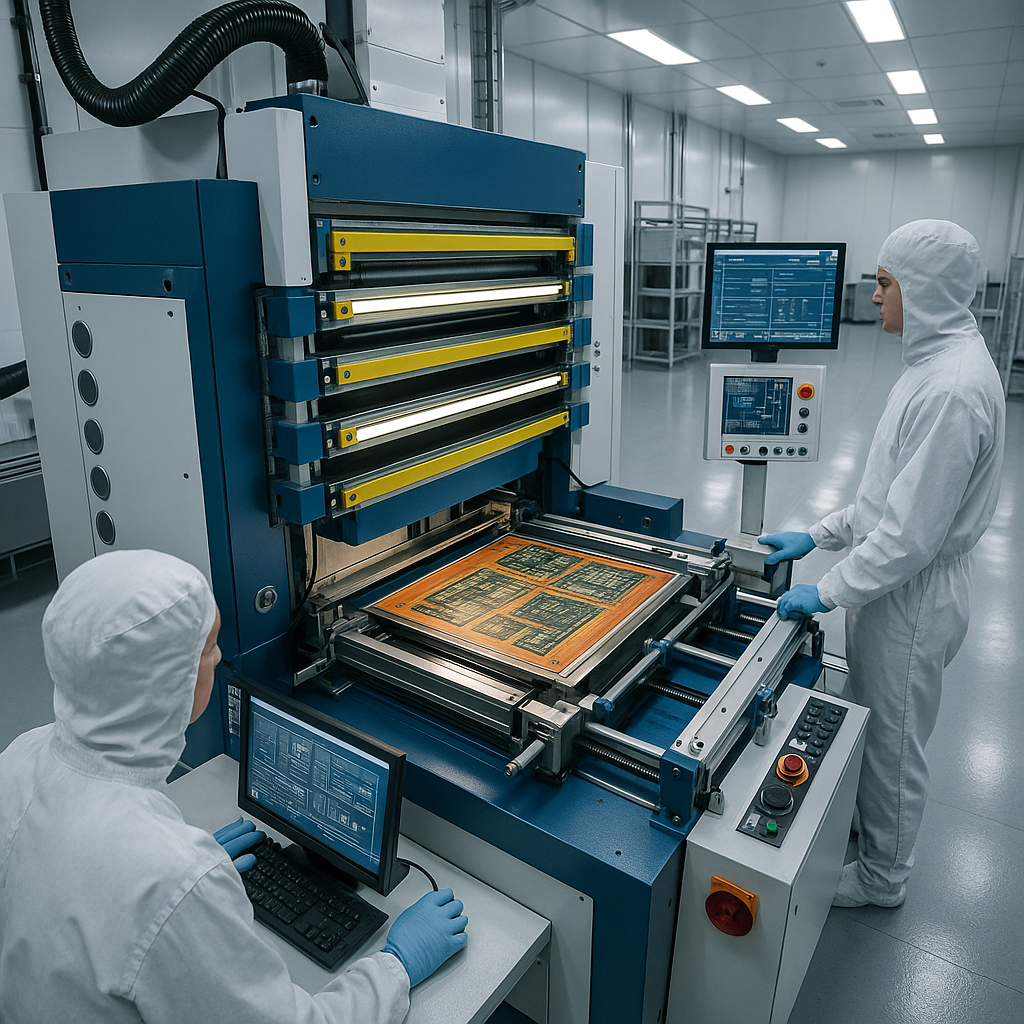
Layer stack-up and lamination represent the most critical and complex phase of rigid-flex manufacturing, requiring careful consideration of multilayer construction techniques. Unlike rigid boards where all layers are laminated simultaneously, rigid-flex assemblies often require sequential lamination. Flexible layers are laminated first, then rigid layers are added only in designated rigid zones. This staged approach prevents excess resin from flowing into flex areas where it would compromise flexibility.
The lamination process must carefully control temperature, pressure, and timing. Too much pressure can squeeze resin into flexible zones or create wrinkles in polyimide layers. Insufficient pressure leads to voids and poor adhesion. Temperature variations across the lamination press can cause differential expansion, leading to layer misregistration. Manufacturers use computer-controlled presses with multiple heating zones and pressure adjustment to maintain consistency.
Surface finishing protects exposed copper and prepares pads for component assembly. Gold plating, ENIG (Electroless Nickel Immersion Gold), or immersion silver provide the necessary protection. In rigid-flex boards, the finish must be compatible with both the rigid and flexible sections and must withstand the mechanical stress of repeated flexing without cracking or delaminating.
Final processing includes applying coverlay or solder mask to protect traces, routing the board outline, and adding stiffeners in areas where mechanical support is needed. Each of these steps must account for the different behaviors of rigid and flexible materials.
Process Considerations Unique to Rigid-Flex Manufacturing
Several aspects of rigid-flex production require specialized approaches that don’t apply to standard rigid board manufacturing.
Layer stack-up design goes far beyond simply specifying copper weight and dielectric thickness. Engineers must consider how materials will behave at the transition zones where rigid and flex sections meet. Abrupt transitions create stress concentration points where repeated flexing can cause copper cracking or delamination. Gradual transitions with carefully selected adhesives distribute stress more evenly, but they require additional process steps and precise alignment.
The choice of adhesive system fundamentally affects board reliability. Acrylic adhesives offer excellent flexibility but may not withstand the high temperatures of multiple reflow soldering cycles. Epoxy-based systems provide superior heat resistance but reduce flexibility. Some manufacturers use adhesiveless constructions where polyimide and copper are directly bonded, eliminating the adhesive layer entirely. This approach maximizes flexibility and thermal performance but requires specialized equipment and process control.
Bend radius optimization determines where and how much the board can flex without damaging traces or causing delamination. The minimum bend radius depends on total stack-up thickness, copper weight, and the number of flex cycles expected during product lifetime. A common guideline suggests minimum bend radius of 10 times the total flex thickness for dynamic applications (repeated flexing) and 6 times for static applications (one-time installation bending). However, these are starting points—actual bend radius must be validated through testing for each specific design.
Trace routing in flex zones requires careful attention to stress distribution. Traces should run perpendicular to the bend axis when possible, distributing stress evenly across the copper width rather than concentrating it at the trace edges. Hatched ground planes rather than solid copper reduce stiffness and improve flexing reliability. Staggered via placement prevents creating lines of weakness where cracks can propagate.
Quality Control Throughout the Manufacturing Process
Ensuring rigid-flex quality demands inspection and testing at multiple stages, not just at the end of production. Each inspection point catches specific types of defects before they propagate to later stages where correction becomes costly or impossible.
Incoming material inspection verifies that raw materials meet specifications before they enter production. Polyimide thickness is measured at multiple points to ensure uniformity. Copper foil undergoes peel strength testing to verify adequate bonding. FR-4 laminates are checked for dielectric constant consistency and moisture content. This upfront investment prevents problems from occurring in the first place rather than discovering them after value-added processing.
Optical inspection systems scan each layer for defects after imaging and etching. Automated optical inspection (AOI) compares actual traces against design files, identifying breaks, shorts, or dimensional variations measured in microns. For rigid-flex boards, AOI must be programmed to handle the varying background colors and reflectivity of different materials within the same assembly.
After drilling, microscopic examination of hole cross-sections reveals potential problems invisible from the surface. Inspectors look for cracks at material interfaces, rough hole walls that could cause plating voids, or resin smear that would interfere with electrical connectivity. A small sample of holes undergoes destructive cross-sectioning, with microscopic examination revealing the internal structure.
Electrical testing verifies connectivity and isolation before assembly. Flying probe testers contact each net, confirming that all intended connections exist and no unintended shorts bridge separate circuits. For rigid-flex boards, this testing must account for the different mechanical properties of rigid and flex zones—probe pressure adequate for rigid areas might damage flexible sections.
Impedance testing ensures that high-speed signal traces meet design requirements. Test coupons built into the manufacturing panel undergo time-domain reflectometry (TDR) measurements, revealing impedance variations along the trace length. Rigid-flex designs must maintain consistent impedance across transitions between rigid and flexible zones, requiring careful control of dielectric thickness and trace geometry.
Peel strength testing assesses adhesion between layers. Test samples undergo mechanical pulling to measure the force required to separate layers. Results must meet minimum values specified in IPC-6013, the standard governing flexible and rigid-flex printed wiring boards. Weak peel strength indicates potential delamination problems during product life.
Design-for-Manufacturability Strategies
Successful rigid-flex production depends heavily on design choices made before manufacturing begins. Engineers who understand production realities create designs that are both functionally superior and reliably manufacturable at scale.
Material compatibility considerations extend beyond basic electrical properties. The coefficient of thermal expansion (CTE) must be matched between adjacent layers to prevent stress during thermal cycling. A polyimide flex layer with low CTE bonded to an FR-4 rigid layer with high CTE will experience shear stress at the interface during temperature changes. This stress accumulates with each thermal cycle until delamination occurs. Designers should specify materials with similar CTE values or include stress-relief features like additional adhesive layers at critical interfaces.
Impedance control in rigid-flex assemblies requires attention to trace geometry, dielectric thickness, and material properties throughout the board. High-speed differential pairs must maintain consistent impedance as they transition from rigid to flexible zones. This demands careful calculation and often requires adjusting trace width or dielectric thickness at transition points. Designers working with manufacturers early in development can optimize these transitions based on actual production capabilities rather than theoretical calculations.
Component placement decisions affect both assembly reliability and product longevity. Components should never be placed on or near flex zones where repeated bending will stress solder joints. Even static bending during assembly can crack solder joints on components too close to bend areas. Recommended practice places components at least 1.5mm away from the edge of rigid sections adjacent to flex zones, though this distance should increase for components with larger thermal mass or in applications with extreme vibration.
Via placement and design significantly impact reliability. Through-hole vias that span from rigid sections into flex zones create stress concentration points. Where possible, vias should be located entirely within rigid sections. When vias must exist in flex areas, they should be tear-dropped and staggered rather than aligned in rows perpendicular to the bend axis. This distribution prevents crack propagation that can occur when vias form a line of weakness.
Common Challenges and Practical Solutions
Even with careful planning and execution, certain challenges arise repeatedly in rigid-flex production. Understanding these challenges and their solutions helps both manufacturers and designers achieve better outcomes.
Layer alignment issues become more pronounced in rigid-flex assemblies because sequential lamination cycles provide multiple opportunities for registration errors to accumulate. Each lamination cycle introduces thermal expansion and resin flow that can shift layers slightly. Manufacturers address this through precision tooling pins that maintain layer registration throughout lamination, computer-controlled presses that minimize temperature variations across the panel, and sequential lamination techniques that build up the stack-up in carefully planned stages.
Resin squeeze-out during lamination can compromise flexibility if excess resin flows into designated flex zones. This problem is especially acute at rigid-to-flex transitions where pressure differentials drive resin flow. Solutions include using pre-preg materials with controlled resin content, designing stack-ups that minimize pressure differentials between rigid and flex zones, and employing sacrificial layers that absorb excess resin before it reaches critical areas.
Copper cracking in flex zones typically results from exceeding the material’s fatigue limits during repeated flexing or from manufacturing defects like rough etch profiles. Prevention strategies include specifying rolled annealed copper rather than electrodeposited copper for dynamic flex applications, minimizing copper weight in areas subject to repeated bending, and ensuring smooth etch profiles through careful process control. When cracks do appear during reliability testing, root cause analysis often reveals design features like sharp bend angles or excessive copper coverage that can be corrected.
Delamination at material interfaces indicates inadequate adhesion or excessive mechanical or thermal stress. Manufacturers prevent delamination through careful adhesive selection, surface preparation that promotes bonding, and lamination processes optimized for the specific material combination. When delamination occurs, destructive analysis of the failure interface reveals whether the root cause was contamination, insufficient bonding temperature or pressure, or material incompatibility.
Throughput pressures can tempt manufacturers to reduce process times or inspection frequencies, but rigid-flex assemblies demand the opposite approach. The complexity of these boards means that defects caught early are much less costly than those discovered after assembly or in the field. Leading manufacturers resist pressure to cut corners, understanding that reliability problems damage reputation far more than slightly longer lead times affect customer satisfaction.
Key Performance Indicators for Quality Production
Measuring and tracking specific metrics helps maintain consistent quality across production batches and identify opportunities for improvement.
Defect density, measured as defects per million opportunities, provides an overall quality metric. For rigid-flex assemblies, achieving defect densities below 50 parts per million requires exceptional process control and thorough inspection aligned with industry reliability testing standards. This metric should be tracked separately for different defect categories—registration errors, copper defects, adhesion failures—to identify which processes need attention.
Alignment accuracy, measured in microns, directly affects electrical performance in multilayer designs. Manufacturers should consistently achieve layer-to-layer registration within ±75 microns for standard products and ±50 microns for high-density designs. Tracking alignment accuracy over time reveals whether tooling needs maintenance or if process parameters require adjustment.
First-pass yield indicates what percentage of boards complete manufacturing without rework. Rigid-flex assemblies typically show lower first-pass yields than rigid boards due to their complexity, but yields above 90% are achievable with mature processes. Tracking yield by design family helps identify problematic features that need design-for-manufacturability improvements.
Time-to-delivery encompasses the entire production cycle from material receipt to final inspection. For rigid-flex assemblies, realistic lead times range from one to three weeks depending on complexity, with emergency turnarounds possible in three to five days for less complex designs. Meeting committed delivery schedules requires not just efficient manufacturing but also reliable material supply chains and accurate production planning.
Building Reliable Assemblies Through Manufacturing Excellence
Producing reliable rigid-flex PCBs demands more than just following standard processes—it requires deep understanding of how materials, processes, and design decisions interact throughout the manufacturing cycle. The integration of rigid and flexible technologies creates assemblies with superior functionality, but only when manufacturing excellence backs up innovative design.
At Flex Plus, our 20+ years of specialized experience in flexible and rigid-flex PCB manufacturing informs every production decision. Our ISO 9001, ISO 13485, IATF 16949, and ISO 14001 certifications reflect our commitment to systematic quality management across all processes. From material inspection through final testing, we maintain the rigorous control needed to deliver assemblies that meet demanding specifications for automotive, medical, aerospace, and consumer electronics applications.
The combination of flexible and rigid technologies will only grow more important as electronic devices become more compact, more capable, and more integrated into demanding applications. Manufacturing processes and quality systems must evolve to meet these challenges while maintaining the reliability that critical applications demand. Understanding the complexities of rigid-flex production—from material behavior to layer alignment to stress management—enables designers and manufacturers to work together creating assemblies that push technological boundaries while delivering proven reliability in real-world applications.