
The difference between a successful product launch and a costly failure often comes down to a single critical factor: the quality of your flexible PCB prototype. In today’s fast-paced electronics industry, where electric vehicles demand ultra-reliable circuits, medical devices require biocompatible precision, and aerospace applications tolerate zero margin for error, your first prototype isn’t just a test—it’s the foundation upon which your entire product stands.
Consider this: A leading EV manufacturer once discovered a fatal flaw in their Head-Up Display system just days before mass production. The issue? Their flexible PCB prototype hadn’t adequately simulated real-world vibration conditions. The result was a six-month delay and millions in lost revenue. This scenario plays out across industries every day, reinforcing a fundamental truth: your prototype phase is not the place to cut corners.
Flexible PCBs have revolutionized how we design everything from smartphones that fold in half to medical devices that wrap around the human body. They’ve enabled AR wearables to become lighter, drones to fly longer, and electric vehicles to become more efficient. Yet despite their widespread adoption, many engineers and product managers still underestimate the complexity of creating an effective flexible PCB prototype. The stakes are particularly high in industries like automotive electronics, where IATF 16949 certification demands flawless execution, or medical devices, where ISO 13485 standards leave no room for error.
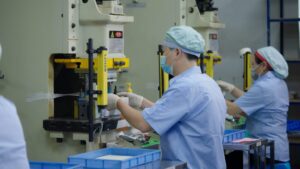
The Journey from Concept to Physical Prototype: Where Precision Meets Innovation
Creating a flexible PCB prototype begins long before the first layer of polyimide hits the production line. The process starts with design submission, where your engineering team’s vision transforms into a manufacturable reality. This initial phase is where many products succeed or fail, often without anyone realizing it until much later.
The design submission process requires more than just sending CAD files to a manufacturer. It demands a comprehensive Design for Manufacturability (DFM) analysis that examines every trace, every bend radius, and every connection point. At this stage, experienced manufacturers can identify potential issues that might not surface until testing—or worse, until your product reaches customers. A trace that’s too close to a bend area, a via placed in a flex zone, or insufficient spacing between copper layers can all spell disaster down the line.
Material selection represents another critical decision point. Engineers must choose between different polyimide substrates, each with unique properties affecting flexibility, heat resistance, and signal integrity. FR4 materials might work for rigid-flex combinations, while pure polyimide offers superior flexibility for dynamic applications. The copper foil thickness—ranging from 18μm to 70μm—directly impacts the circuit’s bending capabilities and current-carrying capacity. These aren’t arbitrary choices; they’re engineering decisions that will determine whether your prototype accurately represents your final product’s performance.
The fabrication techniques employed during prototype creation demand extraordinary precision. Screen printing and photoimaging processes must achieve tolerances as tight as 2/2mil line width and spacing. When you’re working with ultra-thin designs—some modern flexible PCBs achieve overall thicknesses of just 25 microns with gold plating—every micron matters. The photoimaging process uses UV light to transfer circuit patterns onto the substrate with incredible accuracy, while screen printing applies solder mask and other protective coatings that must align perfectly with the circuit traces beneath.
Layer buildup in multilayer flexible PCBs presents its own challenges. Each layer must bond perfectly to the next, with alignment tolerances measured in microns. The adhesive systems used between layers affect not just the mechanical properties but also the electrical performance. Modern advanced techniques like laser direct imaging (LDI) have revolutionized how manufacturers create fine-pitch circuits, enabling innovations in compact devices from smartwatches to surgical instruments.
Testing: The Bridge Between Prototype and Production Success
Once your flexible PCB prototype emerges from fabrication, the real validation begins. Functional testing isn’t a formality—it’s your insurance policy against catastrophic failures during mass production. This phase separates manufacturers who truly understand flexible circuits from those who merely fabricate them.
Electrical testing forms the foundation of prototype validation. Continuity tests verify that every trace conducts as designed, while isolation tests ensure that adjacent circuits don’t interfere with each other. These basic checks might seem simple, but they’re essential for catching manufacturing defects before they multiply. Advanced electrical testing goes deeper, measuring impedance characteristics critical for high-speed signal transmission in applications like telecommunications equipment or optical transceiver modules.
However, electrical testing alone doesn’t tell the complete story for flexible PCBs. The mechanical testing phase reveals how your prototype will behave in real-world conditions. Bend testing subjects the circuit to repeated flexing cycles—sometimes hundreds of thousands of iterations—to simulate years of use in products like foldable smartphones or wearable devices. The results can be sobering: a design that passes electrical tests might fail after just a few thousand bend cycles if the copper traces aren’t properly positioned relative to the neutral bend axis.
Environmental testing pushes prototypes to extremes your product might encounter. Temperature cycling from -40°C to +125°C reveals whether your material choices can withstand the conditions inside an electric vehicle’s battery compartment or the frigid environment of high-altitude aerospace applications. Humidity resistance testing is crucial for medical devices that might be sterilized repeatedly or consumer electronics used in tropical climates.
For specialized applications, testing becomes even more rigorous. Medical device prototypes must undergo biocompatibility testing to ensure they won’t cause adverse reactions when used near or inside the human body. Automotive applications demand vibration testing that simulates the harsh conditions of a vehicle traveling over rough roads for years. Aerospace applications require testing protocols that verify performance in low-pressure, high-radiation environments where failure isn’t an option.
The testing data gathered during the prototype phase provides invaluable insights for optimization. Engineers can identify weak points in the design, adjust material specifications, or modify trace routing to improve reliability. This iterative process—prototype, test, refine, repeat—is where great products are born. Skipping or rushing this phase to meet launch deadlines almost always backfires. A comprehensive testing protocol during prototyping can reduce field failures by up to 50%, translating directly into lower warranty costs and stronger customer satisfaction.
The Unique Advantages That Make Flexible PCBs Indispensable
Understanding why flexible PCBs have become essential across so many industries helps explain why getting the prototype right matters so much. These circuits offer advantages that rigid boards simply cannot match, advantages that only fully manifest when the design and prototype phases are executed properly.
The most obvious advantage is adaptability. Flexible PCBs can bend, twist, and conform to shapes that would be impossible with rigid boards. This capability has enabled entirely new product categories. Consider AR wearables and AI glasses, where the circuit must wrap around the user’s head while maintaining signal integrity. Or look at smart helmets for F1 racing and mining applications, where sensors and processors must integrate seamlessly with protective headgear. These innovations wouldn’t exist without flexible PCB technology.
Space-saving features represent another transformative advantage. By eliminating connectors and allowing three-dimensional routing, flexible circuits enable products to become dramatically smaller. A smartphone’s camera module, for instance, uses flexible circuits to connect multiple components in a space smaller than your thumbnail. The same principle applies to medical devices like portable monitors and diagnostic tools, where miniaturization can make the difference between a device that patients will actually use and one that sits in a drawer.
Weight reduction matters more than many engineers initially realize. In electric vehicles, every gram saved translates into extended range. Flexible circuits can reduce wiring harness weight by up to 70% compared to traditional cable assemblies, contributing directly to vehicle efficiency. In drones and eVTOL aircraft, where weight is even more critical, flexible PCBs enable longer flight times and greater payload capacity. Even in consumer electronics, lighter products feel more premium and reduce shipping costs.
The durability advantage of properly designed flexible circuits often surprises people familiar only with rigid boards. While rigid PCBs can crack under stress or vibration, flexible circuits absorb movement and shock. This resilience makes them ideal for industrial control systems operating in harsh factory environments or telecommunications equipment subjected to constant vibration in cell towers.
Reliability improves significantly when flexible PCBs replace wire harnesses and connectors. Each connector represents a potential failure point. By integrating multiple connections into a single flexible circuit, engineers can reduce failure rates dramatically. Aerospace and defense applications exploit this advantage, where a single failure could have catastrophic consequences. The same principle applies to medical devices, where reliability isn’t just about product reputation—it’s about patient safety.
Signal integrity in high-frequency applications benefits from flexible PCB’s shorter signal paths and controlled impedance characteristics. Telecommunications equipment and 5G infrastructure rely on flexible circuits to maintain signal quality across complex assemblies. The reduced electromagnetic interference (EMI) possible with properly designed flexible circuits also helps products meet increasingly stringent regulatory requirements.
Thermal management capabilities represent an often-overlooked advantage. Advanced flexible PCB technologies now include heat dissipation flow channels that actively manage temperature in high-power applications. Electric vehicle battery management systems use these capabilities to maintain optimal operating temperatures, while beauty tech devices leverage thermal management to ensure user comfort during extended use.
The assembly advantages of flexible circuits extend beyond the circuit itself. Box builds become simpler when a single flexible circuit replaces dozens of wires and connectors. This simplification reduces assembly time, lowers labor costs, and improves consistency. For manufacturers producing high-volume consumer electronics, these advantages translate directly into competitive pricing and faster time-to-market.
Your Prototype Is Your Product’s Foundation
As you prepare to launch your next product—whether it’s an innovative drone system, a life-saving medical device, or an electric vehicle component—remember that your flexible PCB prototype isn’t just a stepping stone. It’s the proving ground where your design either demonstrates its readiness for the real world or reveals the flaws that could derail your entire launch.
The companies that succeed in today’s competitive landscape understand that quality starts at the prototype phase. They partner with manufacturers who bring more than just fabrication capabilities—they bring engineering expertise, comprehensive testing protocols, and the certifications that demonstrate their commitment to excellence. ISO 9001 for quality management, ISO 13485 for medical devices, IATF 16949 for automotive applications, and IPC-6013 compliance for flexible circuits aren’t just letters and numbers. They’re assurances that your prototype is being manufactured to the same standards that will govern your mass production.
At Flex Plus, we’ve seen firsthand how the right prototype approach can accelerate product launches and how the wrong approach can derail them. Our philosophy centers on innovation backed by certified excellence, providing complete manufacturing control from initial design consultation through final assembly. We don’t just manufacture flexible circuits—we partner with engineers to solve complex design challenges, whether that’s developing ultra-thin constructions for wearables, creating flexible COB solutions for medical devices, or engineering rigid-flex combinations for aerospace applications.
The breakthrough technologies we’ve developed—including flexible heat dissipation flow channels, transparent PCBs, and ultra-thin designs as slim as 25 microns—all began as prototypes. Each innovation underwent rigorous testing and refinement before reaching production. This process takes time and expertise, but it’s the only path to products that perform reliably in the field.
When you choose to work with a real flexible PCB factory rather than a broker or trading company, you gain direct access to the engineers and equipment that will produce your final product. This relationship enables rapid iteration during prototyping, immediate feedback on design modifications, and continuity from prototype through mass production. You’re not just buying circuits—you’re building a partnership that supports your product from concept to customer.
Your product launch depends on countless factors, but few are as fundamental as the quality of your flexible PCB. Get the prototype right, invest in comprehensive testing, and partner with manufacturers who understand that your success is their success. The first sample you produce might not be perfect, but with the right approach, it will reveal everything you need to know to make your product launch a success rather than a cautionary tale.
In the end, that’s why your first flexible PCB prototype could make or break your product launch. It’s not just a test—it’s your opportunity to validate every design decision, identify every potential weakness, and refine your product until it’s ready to meet the demands of the real world. Don’t waste that opportunity. Make your prototype count.