
Picture this: Your engineering team just finalized a breakthrough design for an electric vehicle battery management system. The flexible PCB connects multiple sensor modules across curved battery pack surfaces—a perfect application for flex technology. You submit the design to your manufacturer, and then… you wait. Three weeks pass. Four weeks. By the time your prototype arrives, your competitor has already moved to field testing.
This scenario plays out more often than it should in industries where time-to-market determines winners and losers. For professionals in automotive, medical devices, aerospace, and industrial electronics, waiting weeks for flex PCB prototypes doesn’t just delay schedules—it cascades into missed market windows, inflated development budgets, and strategic disadvantages that ripple through entire product lifecycles.
The hidden costs extend far beyond the calendar. Every week spent waiting is a week your engineering team can’t validate critical design assumptions. It’s a week your procurement team can’t finalize component sourcing decisions. It’s a week your project timeline slips further behind competitors who’ve already discovered and corrected their own design flaws. When you’re developing mission-critical medical devices requiring ISO 13485 compliance or automotive systems needing IATF 16949 certification, these delays compound exponentially.

Understanding Quick-Turn Flex PCB Prototyping
Quick-turn flex PCB prototyping fundamentally changes this equation. Unlike traditional manufacturing timelines that stretch 3-6 weeks, quick-turn services compress prototype delivery to 3-7 days. This acceleration transforms how engineering teams approach product development, enabling rapid iteration cycles that were simply impossible under conventional timeframes.
At its core, quick-turn prototyping leverages streamlined manufacturing workflows specifically optimized for prototype quantities. Instead of batching your order with dozens of other projects, manufacturers prioritize prototype runs through dedicated production lines. This doesn’t mean cutting corners—it means eliminating wait times between production stages that make sense for high-volume runs but create unnecessary delays for prototypes.
Understanding the distinction between flex and rigid-flex PCBs becomes critical when planning quick-turn projects. Flexible PCBs consist entirely of flexible substrate material—typically polyimide—allowing the board to bend, fold, and twist while maintaining electrical integrity. Understanding fundamental flex PCB design principles ensures your prototype performs reliably under mechanical stress. These boards excel in applications requiring dynamic flexing, like robotic arm assemblies or medical wearables that conform to body movements.
Rigid-flex PCBs combine flexible circuit sections with rigid board areas in a single integrated structure. The rigid sections provide mounting surfaces for components and connectors, while flex sections enable three-dimensional packaging and movement between rigid zones. This hybrid approach eliminates traditional board-to-board connectors, reducing interconnection points by up to 87% and saving up to 60% of space compared to multi-board rigid solutions.
The concept of bend radius proves especially crucial in prototype design. The minimum bend radius—typically calculated as 10 times the total board thickness for dynamic applications or 6 times for static bends—determines how tightly you can fold the flexible sections without stressing copper traces or causing delamination. Getting this right in the prototype stage prevents costly redesigns during volume production.
Design for manufacturability (DFM) principles take on heightened importance in quick-turn scenarios. Every design element that complicates manufacturing adds time and cost to prototype delivery. Staggered trace routing through flex zones, proper copper balancing between layers, and strategic placement of stiffeners in mounting areas all influence both prototype timeline and eventual production yield.
What Quick-Turn Really Means
Quick-turn flex PCB prototyping typically offers three distinct service tiers, each balancing speed against cost. Standard quick-turn delivers prototypes in 5-7 business days at competitive pricing, suitable for most development schedules. Express service accelerates delivery to 3-4 days with a 50-100% cost premium, ideal for projects approaching critical decision milestones. Emergency runs can produce prototypes in 24-48 hours, though costs increase 100-200% and design complexity may be limited.
The key insight many engineers miss is that quick-turn isn’t merely about speed—it’s about accelerating learning cycles. Consider a typical product development timeline: with 3-week prototype delivery, you might complete three design iterations before production. Quick-turn services enable six, eight, or even ten iterations in the same timeframe. Each iteration uncovers design flaws, validates performance assumptions, and refines manufacturability before you commit to expensive tooling and high-volume production.
The long-term cost savings often exceed the immediate prototype expenses. A rigid-flex design for an aerospace sensor system might cost $800 per unit for a quick-turn prototype run of ten boards—substantially more than standard turnaround pricing. However, discovering a bend radius issue in week two rather than week six prevents a complete redesign cycle. The cost differential between two extra weeks of engineering time, delayed tooling investment, and potential market launch delays easily reaches tens of thousands of dollars.
Real-world examples illuminate these benefits. An industrial controls manufacturer developing a flexible sensor array with optimized stiffener configurations for robotic applications used quick-turn prototyping to test five different designs in three weeks. By week four, they’d validated their optimal design and moved to tooling, shaving six weeks from their original development schedule. The project delivered two months early, capturing a seasonal order window worth $2.3 million that would have otherwise gone to a competitor.
For medical device developers facing regulatory timelines, quick-turn prototyping becomes even more strategic. Testing multiple design iterations early accelerates the design freeze required before initiating costly regulatory submissions. One manufacturer developing a flexible EKG monitor compressed their design validation phase from fourteen weeks to seven by running concurrent prototype iterations, enabling earlier engagement with regulatory bodies.
Design Strategies for Fast Prototyping
Accelerating prototype delivery begins with design decisions made long before you submit Gerber files. The most impactful choices occur during the conceptual design phase, where early attention to manufacturability determines how smoothly your design transitions through fabrication.
Begin by establishing your flex stack-up early in the design process. Standard stack-ups using commonly stocked materials—like 1-ounce copper on 1-mil polyimide with 1-mil adhesive—process faster than exotic specifications requiring special material procurement. While custom materials sometimes prove necessary for specific electrical or mechanical requirements, defaulting to standard constructions accelerates prototype delivery without compromising performance in most applications.
Bend radius calculations deserve attention before routing a single trace. Dynamic applications requiring repeated flexing need conservative bend radii—typically 10-12 times the total board thickness. Static bends in rigid-flex designs can use tighter radii, around 6 times thickness, but still require deliberate planning. Place bend areas early in your layout, then route all traces to flow smoothly through these zones without sharp transitions or right angles.
The strategic placement of stiffeners significantly impacts both prototype delivery time and ultimate product reliability. Stiffeners provide localized rigidity in flex designs, supporting connectors, component mounting areas, and handling zones. However, each stiffener adds manufacturing complexity. Minimize stiffener count by consolidating mounting areas where possible, and use standardized stiffener thicknesses your manufacturer stocks. A design with three carefully placed stiffeners often performs better and processes faster than one with eight distributed stiffeners.
Trace routing through flex zones requires specific techniques that prevent common failure modes. Stagger traces on different layers so they don’t stack directly above one another—this distributes mechanical stress during flexing. Use curved trace routing rather than right angles, which create stress concentration points. Maintain consistent trace widths through bend areas; width changes create stress points that can crack copper over repeated flex cycles. Add teardrop pads at via connections to reinforce these natural stress points.
Common design pitfalls trip up even experienced designers new to flex PCB work. Placing vias directly in flex zones creates mechanical weak points—push vias into adjacent rigid sections or stiffened areas instead. Specifying unnecessary copper weights increases both cost and flex zone stiffness; use 1/2-ounce copper in flex zones unless electrical requirements specifically demand heavier weights. Overlooking clearance requirements between flex and rigid transitions causes delamination issues; maintain at least 50-mil clearance zones around rigid-flex transition areas.
Consider the assembly implications of your flex design during prototyping. Components placed too close to bend lines create assembly challenges and reliability risks. Solder joints near flex zones experience mechanical stress during bending, potentially causing cold solder joints or component failures. Design with assembly in mind from the start, placing components in rigid sections or properly supported stiffened areas.
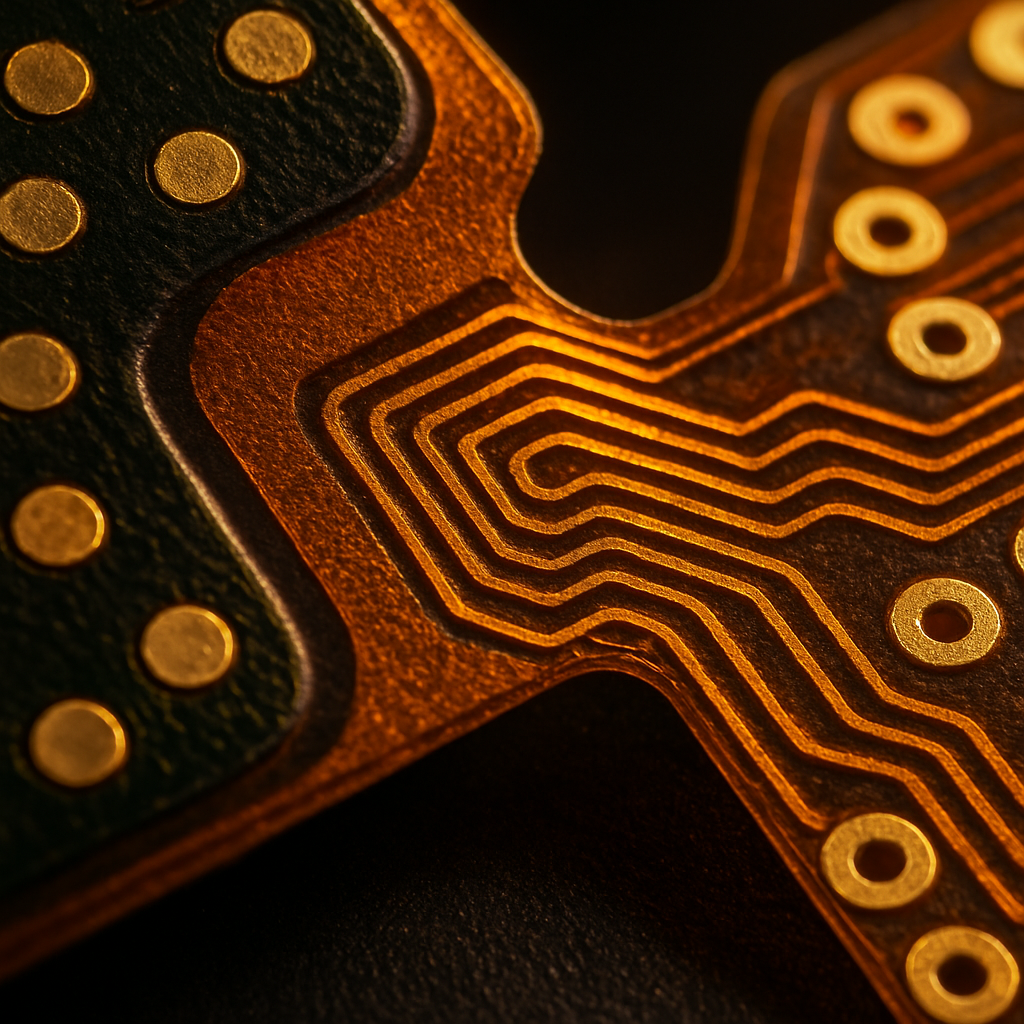
The Quick-Turn Fabrication Process
Understanding quick-turn fabrication workflows helps designers optimize for speed without sacrificing quality. Unlike volume production that batches multiple projects through sequential manufacturing stages, quick-turn processes prioritize rapid progression through each production step.
The process begins with expedited design review and manufacturing file preparation. Within hours of receiving your design files, experienced engineers perform DFM analysis, identifying potential issues before production begins. This front-loaded review prevents delays caused by discovering problems mid-fabrication. Direct communication channels with production engineers enable real-time clarification of design intent, eliminating the multi-day email exchanges common with offshore manufacturers operating across time zones.
Material preparation for quick-turn runs draws from pre-staged inventory rather than triggering new material orders. Manufacturers maintaining ready stocks of common substrate materials, adhesives, and copper foils can immediately begin production. This inventory-based approach explains why standard material specifications accelerate delivery—your quick-turn provider likely has them in stock. Exotic materials might require special ordering, adding days to your timeline.
The actual fabrication sequence mirrors standard production but moves through dedicated quick-turn production lines. Imaging, etching, and lamination proceed without queuing behind larger production runs. For rigid-flex designs, the alignment and lamination of rigid and flexible sections receives particular attention—these critical steps determine whether your bend zones perform as designed. Quick-turn doesn’t mean rushing through these precision operations; it means eliminating wait times between operations.
Quality inspection intensifies for prototype runs because early detection of design issues saves time and money across subsequent iterations. Visual inspection catches obvious defects, while electrical testing verifies continuity and isolation. For designs incorporating COB (Chip-on-Board) technology, additional inspection stages verify die bonding accuracy and encapsulation quality. Advanced manufacturers maintain die bonding precision within ±5° wafer offset angle tolerance—critical for maintaining electrical performance in flex applications where mechanical stress affects chip connections.
Testing protocols for flex and rigid-flex prototypes extend beyond standard electrical testing. Bend testing validates your design’s mechanical performance, subjecting flex zones to simulated operational stresses. This destructive testing on sample boards from your prototype run identifies potential reliability issues before you commit to production. High-reliability applications in automotive or aerospace contexts often specify additional testing regimes—thermal cycling, vibration testing, or humidity exposure—to validate performance under environmental stresses.
Cost Considerations and Trade-offs
The price premium for quick-turn prototyping initially surprises engineers accustomed to standard turnaround economics. A prototype run costing $400 under standard 3-week delivery might cost $600-800 for 5-day turnaround, or $800-1,200 for 3-day express service. Understanding these costs requires looking beyond unit pricing to total program economics.
The immediate costs break down into several components. Expedited material handling and dedicated production line access drive the base premium. Smaller batch sizes eliminate the economies of scale available in production runs, raising per-unit costs. Rush charges for engineering review and expedited shipping add further premiums. For complex rigid-flex designs, the cost multiplication factor increases because these boards require more manufacturing steps, each adding time and cost.
Yet the true cost comparison requires calculating opportunity costs and risk mitigation value. Every week spent waiting for prototypes is a week you can’t identify and correct design flaws. Consider a medical device development project requiring FDA quality system compliance: discovering a flex zone reliability issue in week three rather than week seven enables design correction before tooling investment. The tooling costs for a complex rigid-flex design easily reach $15,000-30,000. If quick-turn prototyping catches a fundamental design flaw before tooling commitment, the service pays for itself many times over.
Market timing considerations amplify these savings in competitive industries. Consumer electronics, automotive technology, and telecommunications equipment all operate on aggressive launch schedules where early market entry commands pricing premiums. Delivering products two months earlier through accelerated development cycles might enable premium pricing before competitors arrive. The revenue differential from early market entry typically dwarfs prototype cost premiums.
Development efficiency gains create additional financial benefits. Engineering teams spend less time waiting and more time solving problems. Project managers face fewer schedule slips and can better coordinate cross-functional teams when prototype delivery becomes predictable. Procurement teams gain earlier visibility into component requirements, enabling better negotiation with suppliers and avoiding costly last-minute purchases.
The trade-off analysis shifts depending on project stage. Early concept validation benefits enormously from quick-turn services—you’re exploring design space and need rapid feedback on fundamental assumptions. Mid-stage development, when design direction is established but details need refinement, also benefits from quick iteration. However, final design validation runs—when you’re confirming a frozen design before production—might use standard turnaround if timeline permits, saving cost when design uncertainty has been resolved.
Practical Checklist for Accelerating Development
Teams aiming to maximize quick-turn prototyping benefits should follow a systematic approach that begins well before submitting design files.
Pre-Design Phase
- Establish clear prototype objectives for each iteration—what specific questions will this prototype answer?
- Select your quick-turn manufacturing partner early, reviewing their design guidelines and material specifications
- Choose standard materials and stack-ups that your manufacturer stocks regularly
- Document your bend radius requirements and flex zone locations in conceptual design
Design Phase
- Perform internal DFM review using your manufacturer’s design rules before file submission
- Place stiffeners and rigid-flex transitions early in layout, then route around these constraints
- Stagger traces through flex zones and avoid placing vias in bend areas
- Use teardrops at all via connections and maintain conservative clearances at rigid-flex transitions
- Review component placement with assembly in mind—keep components away from bend lines
Pre-Submission Checklist
- Verify all Gerber files include complete layer stack-up documentation
- Confirm drill files match your hole size specifications
- Include fabrication notes highlighting critical dimensions or special requirements
- Specify your target delivery timeline clearly
- Identify any areas requiring special attention during manufacturing
Post-Submission Process
- Respond quickly to manufacturer DFM feedback—hours count in quick-turn schedules
- Maintain open communication channels for clarifying design intent
- Request regular status updates if timeline is critical
- Plan assembly and testing procedures while awaiting prototype delivery
Prototype Evaluation
- Document all findings systematically—electrical performance, mechanical behavior, assembly issues
- Test flex zones under realistic mechanical stresses
- Identify design improvements for the next iteration before current prototype testing completes
- Share findings with your manufacturing partner to refine future iterations
Vendor Selection Criteria
- Prioritize manufacturers with in-house capabilities rather than brokers
- Verify relevant certifications (ISO 9001, ISO 13485, IATF 16949) for your industry
- Confirm quick-turn capabilities are supported by actual capacity, not outsourcing
- Evaluate communication responsiveness—quick-turn requires quick answers
- Review their engineering support capabilities for design optimization guidance
The most successful teams treat quick-turn prototyping as a strategic tool rather than an emergency service. By building accelerated iteration into development timelines from the start, they gain competitive advantages that compound throughout product lifecycles. When your industry demands innovation speed, reliable partnerships with capable flex PCB manufacturers become strategic assets, not mere vendor relationships.
Waiting weeks for prototypes costs more than money—it costs market position, competitive advantage, and the opportunity to innovate faster than your industry evolves. In a landscape where technology advances daily and market windows narrow constantly, the question isn’t whether you can afford quick-turn prototyping. It’s whether you can afford not to use it.