
Selecting the right substrate for stretchable electronics determines whether your design succeeds in the real world or fails under repeated stress. Engineers face a constant challenge: balancing extreme flexibility with thermal stability, chemical resistance with processing compatibility, and durability with the specific demands of each application. When designing wearable health monitors, automotive sensors, or medical implants, the substrate choice between TPU flexible PCB and Polyimide isn’t just a material specification—it’s the foundation that enables your entire product vision.
This article compares these two leading substrate materials to help you make informed decisions. For engineers new to multilayer circuit board design, understanding substrate fundamentals becomes even more critical. We’ll examine their mechanical properties, electrical performance, manufacturing considerations, and real-world applications. By understanding where each material excels and where it faces limitations, you can optimize your stretchable electronics design for reliability, manufacturability, and long-term performance.
TPU Flexible PCB: Elasticity Meets Wearable Innovation
Thermoplastic Polyurethane (TPU) has emerged as a breakthrough material for applications requiring extreme flexibility and stretchability. Unlike traditional rigid substrates, TPU offers elongation capabilities reaching up to 600%, making it ideal for devices that must conform to moving human bodies or dynamic mechanical systems.
The primary strength of TPU lies in its exceptional elasticity. When you design a fitness tracker that wraps around a wrist or a medical sensor that adheres to skin, TPU maintains electrical connectivity while stretching and recovering through thousands of cycles. FlexPlus has pioneered TPU circuit technology with substrates ranging from 0.15mm to 1.0mm thickness, supporting 1-2 circuit layers with copper foil between 18-70μm. This configuration enables true wearable applications where comfort meets functionality.
TPU’s compatibility with advanced printing methods opens new design possibilities. Additive manufacturing techniques like screen printing, inkjet printing, and aerosol jet printing work exceptionally well with TPU substrates. These processes allow for rapid prototyping and cost-effective small-batch production—particularly valuable in the fast-moving wearables market where design iterations happen frequently. Connecting flexible substrates to rigid PCBs requires specialized techniques that accommodate TPU’s unique material properties.
However, TPU comes with notable limitations that engineers must address. The material exhibits moisture sensitivity, absorbing water vapor that can affect dimensional stability and electrical performance over time. In medical applications or devices worn during exercise, this moisture sensitivity requires careful encapsulation strategies. Additionally, TPU presents adhesion challenges with certain conductive inks and metal layers. Traditional copper bonding methods that work seamlessly with Polyimide may require surface treatments or intermediate adhesion layers when working with TPU.
Real-world applications demonstrate TPU’s value despite these challenges. Wearable health monitors that track ECG signals or galvanic skin response benefit from TPU’s ability to maintain contact with moving skin without causing discomfort. Beauty tech gadgets—an emerging industry segment—leverage TPU’s softness for facial devices that adapt to complex contours. Smart helmets for F1 racing or mining applications incorporate TPU circuits that withstand extreme vibration while maintaining lightweight construction. These devices succeed because designers understand TPU’s strengths and engineer around its limitations. Teams seeking comprehensive guidance should explore thermoplastic polyurethane processing fundamentals to optimize material selection and fabrication methods.
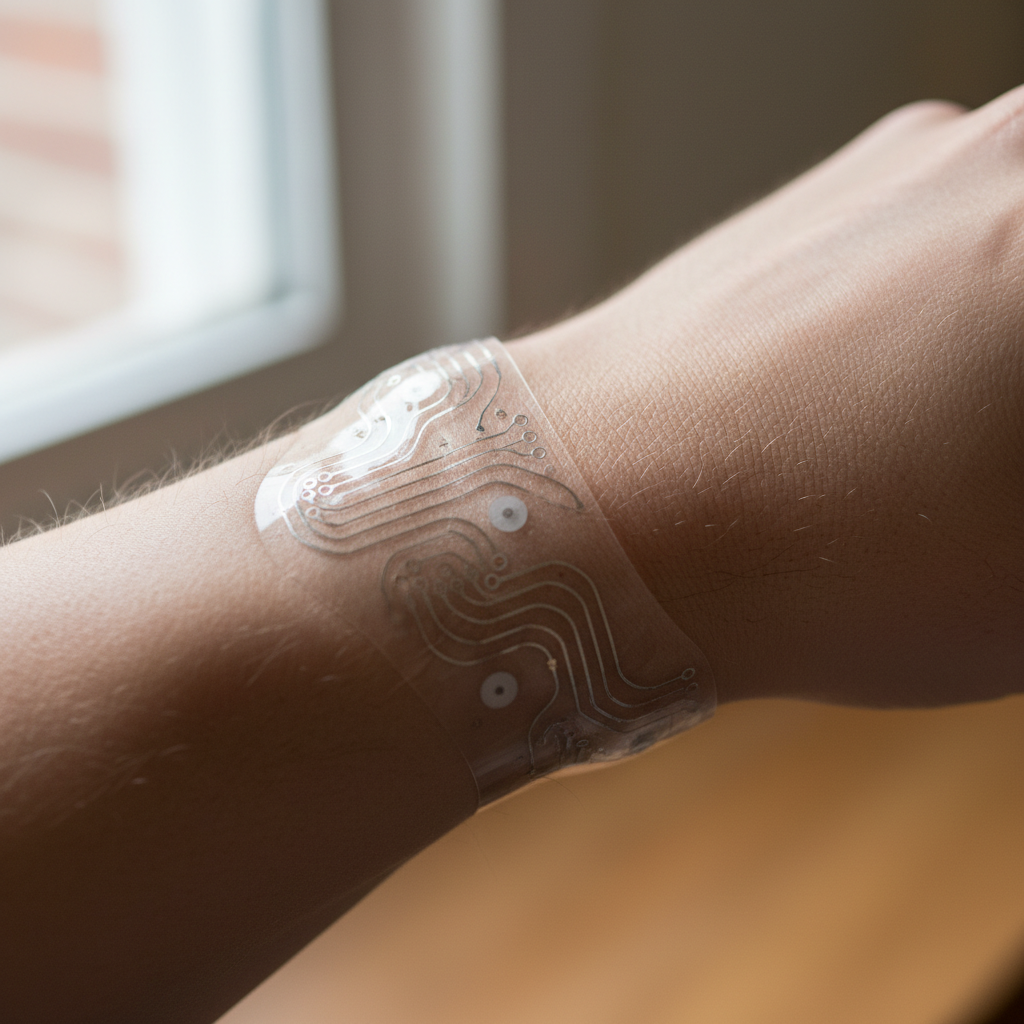
Polyimide Substrates: The Gold Standard for Thermal Stability
Polyimide has served as the industry standard for flexible electronics for decades, earning its reputation through unmatched thermal stability and chemical resistance. When your design requires exposure to temperatures exceeding 250°C—common in automotive under-hood applications or during reflow soldering—Polyimide maintains structural integrity and electrical performance where other materials would fail.
The thermal performance of Polyimide substrates extends beyond simple heat resistance. With glass transition temperatures (Tg) above 300°C and 5% thermal weight loss temperatures often exceeding 500°C, Polyimide supports the complete range of conventional PCB manufacturing processes. FlexPlus utilizes Polyimide substrates in multilayer flexible PCBs up to 8 layers and rigid-flex configurations up to 12 layers, enabling complex circuit architectures that would be impossible with more temperature-sensitive materials.
Chemical resistance represents another critical advantage. Polyimide withstands exposure to acids, alkalis, and most organic solvents without degradation—though concentrated sulfuric or nitric acid and certain halogens remain exceptions. This chemical stability proves essential in industrial control systems, automotive sensors exposed to oils and fuels, and medical devices that undergo sterilization processes. The material maintains its properties through hundreds of autoclave cycles, a requirement that eliminates many alternative substrates from consideration.
Processing compatibility gives Polyimide a decisive edge in high-volume manufacturing. The substrate supports traditional photolithography, wet etching, and lamination processes refined over decades of PCB production. Minimum trace widths and spacing down to 0.05mm/0.05mm (2mil/2mil) become achievable with Polyimide, enabling the high-density interconnect (HDI) designs required in smartphones and compact wearables. This processing maturity translates to higher yields, more predictable costs, and shorter time-to-market compared to emerging substrate technologies.
The rigidity of Polyimide—relative to TPU—presents both advantages and constraints. While less stretchable, this characteristic provides dimensional stability during manufacturing and assembly. Components mount more reliably, solder joints form more consistently, and the finished circuit maintains its geometry under stress. For applications requiring flexibility rather than stretchability—such as devices with hinges, foldable sections, or three-dimensional packaging—Polyimide delivers the perfect balance.
Widespread adoption across flexible electronics applications has created robust supply chains, well-documented design rules, and extensive manufacturing expertise. When designing with Polyimide, you benefit from twenty years of industry learning, standardized material grades like Kapton, and proven reliability data spanning billions of device-hours. Research from the National Institutes of Health demonstrates how molecular structure optimization enhances Polyimide’s thermodynamic and optical properties for advanced flexible substrate applications. This maturity reduces risk in complex projects where failure isn’t an option.
Mechanical Performance: Stretchability, Fatigue, and Architectural Design
Understanding the mechanical differences between TPU and Polyimide requires examining how each substrate behaves under real-world stress conditions. Stretchability represents the most obvious distinction. TPU accommodates large strains—up to 600% elongation depending on formulation—while Polyimide typically supports flexibility through bending rather than stretching. A wearable device moving with an elbow joint might see 30-40% local strain, easily managed by TPU but potentially problematic for Polyimide without careful architectural design.
Fatigue life determines whether a device survives thousands of flex cycles or fails prematurely. Polyimide substrates excel in repetitive bending applications, maintaining electrical connectivity through millions of flex cycles when properly designed. The material’s elastic modulus and yield strength create predictable stress-strain relationships that engineers can model accurately. TPU, while more forgiving in individual extreme deformation events, requires careful attention to fatigue mechanics in applications involving repeated stretching and recovery. The viscoelastic nature of TPU means that creep and stress relaxation must be factored into long-term reliability predictions.
Surface characteristics influence both mechanical and electrical performance. Polyimide surfaces readily accept copper cladding through traditional adhesive systems, creating reliable conductor-substrate interfaces. TPU surfaces often require plasma treatment, chemical modification, or adhesion-promoting layers to achieve comparable bond strength. This surface engineering adds process complexity but enables the unique capabilities that TPU offers.
Architectural patterns optimize each substrate’s mechanical strengths. Serpentine traces—winding conductor paths that unfold under strain—allow rigid conductors like copper to function on stretchable substrates. When designing TPU circuits, serpentine geometries convert substrate elongation into trace bending, keeping local copper strain within elastic limits. The serpentine amplitude, wavelength, and trace width become critical design parameters that must be optimized for each application’s strain profile.
Island-bridge designs represent another architectural strategy particularly effective with TPU. Rigid component “islands” connected by flexible “bridges” concentrate strain in designated regions while protecting sensitive components and interconnections. FlexPlus employs island-bridge architectures in wearable sensors where components like microcontrollers and batteries occupy rigid regions while stretchable TPU sections conform to body movements. This hybrid approach combines the advantages of both rigid and stretchable electronics.
Polyimide benefits from different architectural considerations. Dynamic flex circuits designed for repeatedly bending hinges optimize trace placement in neutral bend axes where tensile and compressive stresses minimize. Stress relief features like teardrops at via locations and rounded corners instead of sharp angles extend fatigue life. These design rules, refined through decades of flexible PCB manufacturing, apply directly to Polyimide but require adaptation for TPU’s fundamentally different mechanical behavior.
Electrical Performance and Manufacturing Considerations
Electrical and dielectric properties determine whether a substrate can reliably support your circuit requirements. Polyimide offers excellent dielectric strength—typically 100-300 kV/mm—and stable electrical performance across temperature ranges from -269°C to +400°C. This stability ensures that transmission line impedances, capacitive coupling, and insulation resistance remain within specification throughout the device’s operating envelope. In high-frequency applications like RF antennas or optical transceiver circuits, Polyimide’s well-characterized dielectric constant (typically 3.1-3.5 at 1 MHz) enables precise impedance control.
TPU’s dielectric properties, while adequate for many applications, show greater temperature and frequency dependence. The material’s dielectric constant varies with formulation but generally falls in the 4.0-6.0 range—higher than Polyimide. This difference impacts high-frequency signal integrity and requires careful impedance matching in RF designs. However, for low-frequency wearable applications like ECG monitoring or motion sensing, TPU’s electrical performance proves entirely sufficient.
Conductor track reliability depends critically on substrate-conductor interface quality. Polyimide’s mature adhesion systems create robust copper-substrate bonds that withstand thermal cycling, flexing, and environmental exposure. The rolled-annealed copper foils used in flexible PCB manufacturing develop mechanical properties optimized for flexing applications. When laminated to Polyimide using acrylic or epoxy adhesive systems, these copper layers maintain electrical continuity through millions of flex cycles.
TPU circuits require alternative conductor approaches. Printed silver or carbon-based conductive inks, deposited through screen printing or inkjet processes, create flexible conductors that move with the substrate. While these materials exhibit higher electrical resistance than copper—potentially limiting current-carrying capacity or increasing signal loss—they survive the extreme strains that would crack copper traces. Recent advances in stretchable conductor formulations, including liquid metal composites and serpentine nanowire networks, continue to improve TPU circuit performance.
Manufacturing considerations directly impact design feasibility and cost. Polyimide substrates flow through conventional PCB fabrication equipment with minimal process modifications. Photoresist application, UV exposure, chemical etching, and automated optical inspection (AOI) all proceed using established procedures. This manufacturing compatibility enables the high-volume production capabilities that FlexPlus offers—from rapid prototyping within one week to mass production scaling.
Temperature budgets during assembly determine component selection and process sequences. Polyimide withstands standard lead-free reflow profiles with peak temperatures around 260°C, allowing conventional surface-mount assembly. TPU substrates typically limit processing temperatures to 120-150°C, restricting component attachment to conductive adhesives, low-temperature solders, or mechanical connectors. This temperature constraint narrows component choices but aligns well with the wearable and medical applications where TPU excels.
Surface treatments enhance reliability for both substrates. Plasma cleaning removes organic contamination and increases surface energy, improving adhesion of subsequent layers. Polyimide circuits benefit from oxide treatments that roughen copper surfaces, creating mechanical interlocking for coverlay adhesion. TPU surfaces respond well to corona treatment or chemical primers that promote ink or adhesive bonding. These surface preparation steps, while adding process complexity, significantly improve long-term reliability.
Selecting the Right Substrate: Application-Driven Decision Framework
Choosing between TPU and Polyimide begins with clear requirements definition. When large strain—exceeding 20-30% elongation—becomes a fundamental requirement rather than an occasional exception, TPU emerges as the logical choice. Wearable devices designed for continuous skin contact, such as biometric patches or rehabilitation monitors, leverage TPU’s softness and conformability to enhance user comfort and sensor-skin interface quality. The material’s gentle, textile-like feel encourages patient compliance in medical monitoring applications where device abandonment rates plague less comfortable alternatives.
High-temperature tolerance requirements immediately favor Polyimide. Automotive applications exposed to engine compartment temperatures routinely exceed 125°C—beyond TPU’s practical limits but well within Polyimide’s comfort zone. Similarly, devices requiring conventional reflow soldering for component attachment must use Polyimide substrates to survive the 260°C thermal exposure. Industrial control systems, aerospace electronics, and telecommunications equipment all benefit from Polyimide’s thermal stability.
Environmental exposure guides substrate selection as well. Devices operating in chemically aggressive environments—industrial process control, agricultural equipment, or medical sterilization—require Polyimide’s chemical resistance. Conversely, TPU’s moisture sensitivity makes it less suitable for marine applications or outdoor devices without substantial protective encapsulation. However, TPU’s resistance to oils and petroleum products opens opportunities in certain industrial applications where Polyimide might degrade.
Manufacturing volume and cost considerations influence the decision. Polyimide’s compatibility with high-volume manufacturing processes and established supply chains often provides cost advantages in mass production. TPU circuits, typically produced through additive printing methods, excel in small-batch customization where tooling costs dominate or where rapid design iterations outweigh per-unit cost considerations. FlexPlus’s capabilities in both TPU circuit fabrication (10-600mm sizes) and conventional Polyimide flexible PCB manufacturing (up to 3-4 meters in specialized applications) enable appropriate substrate selection based on production requirements.
Hybrid solutions combining both substrates offer balanced properties for complex devices. A wearable health monitor might integrate a TPU circuit for the body-conforming sensor array with a Polyimide flexible PCB for the control electronics requiring high-density interconnects and thermal management. These hybrid designs, connected through specialized interfaces like anisotropic conductive film or flex-to-flex connectors, optimize each circuit section for its specific requirements.
Consider regulatory requirements during substrate selection. Medical devices requiring ISO 13485 compliance and biocompatibility testing must use substrates with documented safety profiles. Both medical-grade TPU formulations and Polyimide materials offer appropriate certifications, but the specific application—implantable versus external wear, for example—may favor one over the other. FlexPlus maintains ISO 13485 certification and offers biocompatible flexible PCB solutions to support medical device manufacturers through regulatory processes.
Design for manufacturing (DFM) analysis early in the development process prevents costly substrate mismatches. Engage with manufacturing partners to review tolerance requirements, conductor geometries, and assembly processes before finalizing substrate selection. FlexPlus’s comprehensive DFM support evaluates designs against manufacturing capabilities, identifying potential issues before prototype production. This early collaboration reduces iteration cycles and accelerates time-to-market.
Strategic Substrate Selection for Reliable Stretchable Electronics
TPU flexible PCB and Polyimide substrates offer complementary strengths that address different design requirements in stretchable electronics. TPU’s exceptional elasticity, skin-friendly properties, and compatibility with additive manufacturing make it the substrate of choice for wearables requiring large strain and user comfort. Polyimide’s unmatched thermal stability, chemical resistance, and manufacturing maturity position it as the industry standard for applications requiring high-temperature tolerance, chemical durability, and high-density interconnects.
The optimal substrate choice emerges from careful analysis of your specific application requirements: operating temperature range, mechanical strain profile, environmental exposures, assembly processes, and production volumes. Consider not just the substrate’s baseline properties but also how architectural designs—serpentine traces, island-bridge structures, and stress relief features—can optimize performance for your specific use case.
Environmental conditions throughout the device lifecycle influence reliability. Moisture exposure, chemical contact, thermal cycling, and UV radiation all degrade materials over time. Match substrate selection to the most demanding environmental conditions your device will face, not just average operating conditions. Engineers should also address potential flexible circuit reliability issues early in the design process to prevent costly field failures. Strategic material selection, validated through accelerated life testing, ensures your product survives its intended lifespan with reliability margins to spare.
As stretchable electronics continue enabling innovations in wearables, medical devices, and automotive applications, substrate technology evolves rapidly. FlexPlus’s 20+ years of flexible PCB manufacturing experience, combined with breakthrough technologies like TPU circuits and ultra-thin designs down to 25 microns, positions us as your engineering partner from concept through mass production. Our certifications—ISO 9001, ISO 13485, IATF 16949, and ISO 14001—demonstrate our commitment to quality, medical device reliability, automotive standards, and environmental responsibility.
Whether you’re developing next-generation wearable health monitors, beauty tech gadgets, or automotive sensors, the substrate decision fundamentally shapes your product’s performance and reliability. By understanding the distinct advantages TPU and Polyimide offer, and by leveraging architectural designs that maximize each material’s strengths, you create stretchable electronics that deliver on their promise through thousands of flex cycles and years of reliable operation.