
When your electric vehicle prototype fails thermal testing at 125°C, or when your automotive sensor’s flexible circuit delaminates after 10,000 vibration cycles, the $0.50 you saved per board suddenly doesn’t seem worth it. In the automotive electronics industry, where a single component failure can trigger million-dollar recalls and destroy brand reputations, the quality management certification of your FPCB supplier isn’t just paperwork—it’s your insurance policy against catastrophic failure.
IATF 16949 represents the gold standard for automotive quality management systems. Born from the merger of QS-9000, VDA 6.1, EAQF, and AVSQ in 1999, this certification framework evolved to become the unified global benchmark that automotive OEMs demand from their entire supply chain. Unlike generic ISO 9001 certification, IATF 16949 builds upon that foundation with automotive-specific requirements that address the unique challenges of producing components for vehicles where human safety is paramount.
At its core, IATF 16949 emphasizes defect prevention rather than defect detection. This philosophical shift transforms how flexible PCB manufacturers approach quality. Instead of inspecting problems out of finished boards, certified suppliers engineer quality into every process step—from raw polyimide material selection through final electrical testing. The standard mandates continuous improvement methodologies that systematically eliminate variation, reduce waste, and enhance process capability over time.
For automotive purchasing managers evaluating FPCB suppliers, this certification signals something profound: the manufacturer has demonstrated—through rigorous third-party audits—that they possess the systems, discipline, and technical capabilities to deliver consistent quality across thousands or millions of production units. It’s the difference between a supplier who can make ten perfect prototypes and one who can deliver 500,000 defect-free flexible circuits for your EV battery management system.
Why Automotive FPCB Suppliers Need IATF 16949 Certification
The automotive industry operates under quality expectations that dwarf most other sectors. When a smartphone manufacturer experiences a 2% field failure rate, they issue software updates and replace units under warranty. When an automotive supplier’s flexible circuit fails in an electronic braking system, people die. This stark reality explains why automotive OEMs won’t even consider suppliers without IATF 16949 certification for production programs.
The certification aligns FPCB manufacturers with automotive customer expectations in specific, measurable ways. Complete traceability—from raw material lot numbers through every manufacturing process parameter to final customer delivery—becomes mandatory, not optional. When Toyota or Tesla investigates a potential issue, they expect to trace any suspect board back to its exact production date, copper foil batch, lamination temperature curve, and even the specific technician who performed final inspection.
Risk management under IATF 16949 transforms from reactive firefighting into proactive prevention. Certified flexible PCB manufacturers must identify potential failure modes before they occur, implement controls to prevent them, and maintain statistical evidence that these controls work consistently. For complex automotive applications—like the 1.2-meter flexible circuits connecting sensors throughout an autonomous vehicle’s chassis—this systematic risk mitigation proves essential.
The standard also addresses warranty risk and cost of poor quality in ways that directly impact automotive electronics manufacturers’ bottom lines. An IATF 16949-certified FPCB supplier has demonstrated process capability indices (Cpk) of 1.33 or higher for critical characteristics, meaning statistical confidence that 99.994% of production will meet specifications. Compare this to uncertified suppliers working with Cpk values of 1.0 or lower, where 2,700 defects per million represent the norm.
Consider the real-world implications: an automotive radar module manufacturer sourcing flexible circuits for their new ADAS system faces a choice between a certified supplier at $8.50 per board and an uncertified competitor at $6.75. Over a 100,000-unit production run, the certified supplier costs $175,000 more. But a single field failure requiring dealer service costs approximately $850 in warranty expense. If the cheaper supplier’s inferior process controls result in just 206 additional field failures (0.2% incremental failure rate), those savings evaporate—and that calculation excludes the brand damage, potential recalls, and litigation exposure that defects in safety-critical systems create.
Core Frameworks and Tools in IATF 16949 for FPCB Manufacturing
IATF 16949 certification isn’t achieved through wishful thinking or good intentions. The standard mandates specific methodologies and tools that transform how flexible PCB manufacturers engineer and control their processes. These frameworks directly address the technical challenges inherent in producing reliable flexible circuits for automotive applications.
Advanced Product Quality Planning (APQP) structures the entire new product introduction process into five phases: ① planning and definition, ② product design and development, ③ process design and development, ④ product and process validation, and ⑤ feedback, assessment, and corrective action. For an FPCB manufacturer developing a new rigid-flex circuit for an EV battery disconnect system, APQP ensures that design feasibility, manufacturing capability, and quality controls are systematically addressed before committing to production tooling.
At Flex Plus, our APQP approach means automotive customers receive design for manufacturing feedback during the concept phase—before finalizing their flexible circuit layout. Our engineers evaluate whether proposed minimum trace widths of 0.05mm can be consistently manufactured with adequate process margins, whether the specified polyimide thickness maintains flexibility through 50,000 bend cycles at the customer’s intended radius, and whether the proposed stiffener design creates stress concentrations that could cause failure in automotive temperature extremes of -40°C to 125°C.
Failure Mode and Effects Analysis (FMEA) provides the systematic framework for identifying what could go wrong and preventing it. In flexible PCB manufacturing, FMEA addresses both design-related failure modes (DFMEA) and process-related failure modes (PFMEA). A design FMEA for an automotive sensor flexible circuit might identify insufficient copper thickness as a potential failure mode with high severity (electrical open circuit, safety impact), moderate occurrence (if not properly specified), and moderate detection (might pass initial testing but fail under thermal stress). The resulting Risk Priority Number guides whether additional design controls—like minimum copper weight specifications and thermal modeling—are required.
Process FMEA operates at the manufacturing level. For the critical lamination process where polyimide layers and copper are bonded together, PFMEA systematically evaluates potential failure modes: inadequate adhesion strength, trapped voids causing dielectric breakdown, misregistration between layers, or thermal warpage affecting dimensional accuracy. Each failure mode receives severity, occurrence, and detection ratings that drive implementation of process controls—like statistical process control on lamination temperature and pressure, automated optical inspection to detect voids, and dimensional measurement at multiple process stages.
Measurement System Analysis (MSA) ensures that the instruments and methods used to verify critical characteristics are capable of detecting variation with adequate precision and accuracy. When an automotive FPCB specification requires conductor width tolerance of ±0.02mm, MSA validates that the optical measurement system can reliably distinguish between acceptable parts at 0.12mm and rejectable parts at 0.10mm. Without MSA, manufacturers might reject good parts or, worse, accept defective ones because their measurement system introduces more variation than the actual manufacturing process.
Statistical Process Control (SPC) transforms quality from inspection-based to prevention-based. Rather than measuring finished flexible circuits and sorting good from bad, SPC monitors key process parameters in real-time and alerts operators when the process begins trending toward out-of-control conditions—before defects are produced. For electroless copper plating, a critical process in multilayer FPCB fabrication, SPC tracks solution temperature, pH, and copper concentration every hour. When parameters drift toward control limits, corrective action prevents the next batch from experiencing insufficient copper deposition that would create electrical opens in the finished circuits.
These tools integrate into daily manufacturing operations at certified facilities. During a recent production run of 50,000 flexible circuits for an automotive lighting application, our SPC system detected a gradual downward trend in lamination pressure over three shifts. Before the process reached lower control limits—and certainly before producing defective parts—our process engineers identified a hydraulic actuator requiring maintenance. The issue was resolved with zero scrap generated and zero impact to the customer’s delivery schedule. This proactive response exemplifies the difference IATF 16949 methodologies create.
The Critical Role of PPAP in Automotive PCB Production
The Production Part Approval Process (PPAP) represents the formal gateway between prototype development and series production in automotive supply chains. No matter how excellent your flexible circuit design or how capable your manufacturing processes, automotive OEMs will not authorize production shipments without approved PPAP documentation. Understanding PPAP’s significance helps explain why IATF 16949 certification matters so critically for automotive FPCB suppliers.
PPAP requires suppliers to demonstrate—through extensive documentation and sample parts—that their manufacturing process can consistently produce parts meeting all engineering specifications and customer requirements. The standard defines 18 specific elements that may be required depending on customer specifications and part complexity, including design records, engineering change documentation, customer engineering approval, design FMEA, process flow diagrams, process FMEA, control plans, MSA studies, dimensional results, material and performance test results, initial process capability studies, qualified laboratory documentation, appearance approval report, sample production parts, master sample, checking aids, customer-specific requirements, and part submission warrant.
For complex automotive flexible circuits—like the rigid-flex assemblies that connect an electric vehicle’s battery management system across multiple cell modules—PPAP documentation can exceed 500 pages and require months of preparation. This isn’t bureaucratic excess; it’s systematic verification that every critical characteristic has been identified, measured, and proven capable of meeting specifications across representative production volumes.
Process capability studies form the heart of PPAP. These statistical analyses demonstrate that manufacturing processes can consistently hold tolerances with adequate margin. Automotive standards typically require process capability indices (Cpk) of 1.33 or higher for critical characteristics and 1.67 or higher for safety-related characteristics. In practical terms, a Cpk of 1.33 means the process variation consumes only 75% of the specification tolerance band, providing margin for inevitable process drift while maintaining 99.994% defect-free production.
Consider a flexible PCB with a critical impedance specification of 50 ohms ±10% (45-55 ohms) for high-speed signal traces. To achieve Cpk of 1.33, the manufacturing process must produce impedance values with a standard deviation no greater than 1.25 ohms, centering around the 50-ohm target. This level of control requires precise management of dielectric thickness (±0.005mm), copper plating uniformity, and trace width consistency—exactly the type of manufacturing discipline that IATF 16949 certification ensures.
At Flex Plus, our PPAP submissions for automotive customers routinely demonstrate Cpk values exceeding 1.67 for dimensional characteristics and 1.50 for electrical characteristics. This isn’t achieved through heroic efforts or special prototype runs; it’s the natural result of manufacturing processes designed and controlled to IATF 16949 requirements from the outset. When an automotive electronics manufacturer receives our PPAP submission with 100% dimensional conformance across 300 measured parts and Cpk values above 1.67, they gain confidence that our manufacturing process won’t be the weak link in their supply chain during the three-to-seven-year vehicle production lifecycle.
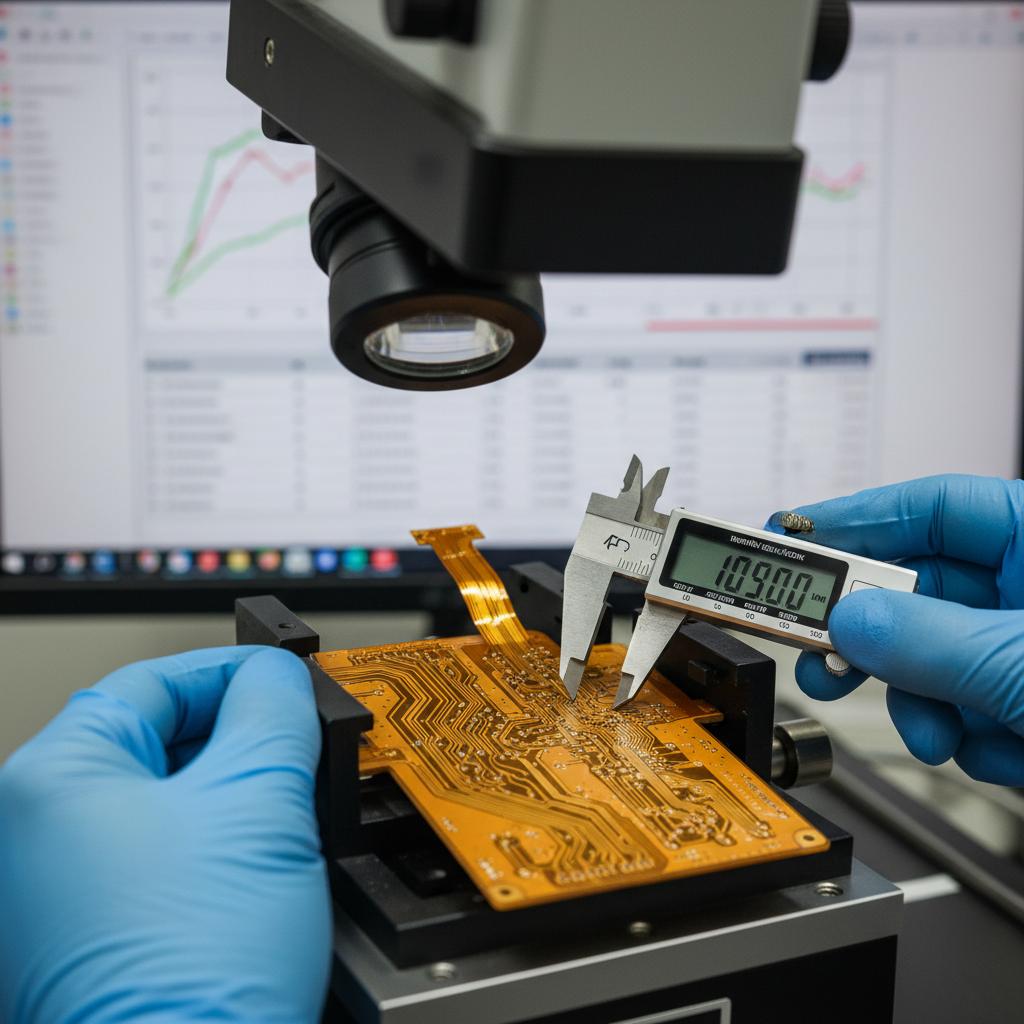
The formal approval process creates accountability through traceability. Every PPAP submission includes a Part Submission Warrant—a document signed by authorized representatives certifying that submitted samples represent actual production processes and that the supplier commits to manufacturing all production parts using the approved processes and controls. If quality issues emerge later, this documentation provides the audit trail to investigate root causes and implement corrective actions.
Achieving IATF 16949 Certification: The Path for FPCB Manufacturers
For flexible PCB manufacturers aspiring to serve automotive customers, achieving IATF 16949 certification represents a substantial investment that transforms the organization. The process typically requires 12-24 months from initial commitment to successful certification audit, demanding leadership commitment, capital investment in systems and equipment, and cultural transformation across the manufacturing workforce.
The journey begins with gap analysis—a comprehensive assessment comparing current practices against IATF 16949 requirements. For many FPCB manufacturers accustomed to consumer electronics or industrial customers, this analysis reveals significant gaps in areas like preventive maintenance systems, calibration programs, statistical process control implementation, and customer-specific requirement management. The gap analysis creates a roadmap prioritizing which systems require development or enhancement to meet certification requirements.
Process mapping follows gap analysis, documenting every manufacturing step from raw material receiving through final packaging and shipment. This detailed documentation—often called turtle diagrams in automotive quality terminology—identifies inputs, outputs, process parameters, measurement methods, and control mechanisms for each process. For flexible PCB manufacturing, process mapping might document 40-60 distinct process steps, each requiring defined procedures, work instructions, and control plans.
Documentation development consumes substantial time and resources during IATF 16949 implementation. The quality management system requires a hierarchy of documents: a quality manual defining the overall QMS scope and structure, detailed procedures describing how key processes operate, work instructions providing step-by-step operator guidance, and forms or templates for capturing quality records. For a medium-sized FPCB manufacturer, this documentation package might comprise 200+ pages of procedures and 100+ forms and templates.
Training represents another critical implementation element. Every employee—from senior management through production operators—requires training on automotive quality concepts, their role within the QMS, and specific procedures relevant to their responsibilities. Machine operators learn statistical process control principles and how to respond when control charts indicate process drift. Engineers receive APQP and FMEA training. Quality personnel study MSA and gauge R&R methodology. Management teams explore customer-specific requirements from major OEMs like Toyota’s production system principles or Volkswagen’s formel Q requirements.
Internal auditing develops organizational capability to assess QMS effectiveness and identify opportunities for improvement before external certification audits occur. Certified internal auditors systematically evaluate each process against IATF 16949 requirements, documenting conformances and nonconformances. These internal audits often reveal gaps missed during initial implementation, allowing corrective action before the high-stakes certification audit.
The certification audit itself occurs in two stages. Stage 1 reviews documentation readiness, assessing whether the quality management system design meets standard requirements. Stage 2 evaluates implementation effectiveness, with auditors observing actual manufacturing operations, interviewing employees, and examining quality records. Auditors might spend three to five days on-site, depending on facility size and product complexity, examining everything from calibration records on dimensional measurement equipment to training records for lamination press operators.
At Flex Plus, our IATF 16949 certification—maintained continuously since our initial certification—reflects this comprehensive approach to automotive quality. Our quality management system integrates seamlessly with manufacturing operations rather than existing as a parallel bureaucracy. When our lamination operators enter process parameters into manufacturing execution systems, that data automatically feeds statistical process control charts that quality engineers monitor. When customer specifications change, our change management process ensures that process FMEAs, control plans, and work instructions are systematically updated before implementing the changes in production. This integration exemplifies mature IATF 16949 implementation.
Strategic Benefits: Why Certification Drives Competitive Advantage
Beyond meeting customer requirements, IATF 16949 certification delivers strategic advantages that enhance competitiveness and profitability for flexible PCB manufacturers serving automotive markets. These benefits extend across quality performance, operational efficiency, customer relationships, and market positioning.
Consistent quality emerges as the most immediate and tangible benefit. The systematic process controls, statistical monitoring, and preventive focus that IATF 16949 demands directly reduce variation and defect rates. Certified FPCB manufacturers typically achieve first-pass yield improvements of 3-8 percentage points compared to pre-certification baseline performance. For high-mix, low-volume automotive applications—like specialized flexible circuits for luxury vehicle infotainment systems—this yield improvement translates to reduced scrap costs and improved delivery performance.
Customer trust and reduced audits represent another significant advantage. Automotive OEMs and Tier 1 suppliers maintain extensive approved supplier lists, and IATF 16949 certification serves as a mandatory entry requirement. Without certification, manufacturers face constant customer audits, supplier development initiatives, and conditional approval status. Certified suppliers undergo periodic surveillance audits (typically annually) but avoid the resource drain of multiple customer audits simultaneously evaluating similar quality system elements.
The competitive differentiation that certification provides proves especially valuable in commoditized market segments. When multiple FPCB suppliers quote on an automotive radar module project, certification status quickly separates qualified candidates from those requiring extensive development before they can serve automotive programs. Procurement teams recognize that selecting a certified supplier reduces their own risk exposure and accelerates program launch timelines by avoiding the supplier development period uncertified vendors require.
Operational efficiency gains often surprise manufacturers during IATF 16949 implementation. The systematic approach to process control, preventive maintenance, and problem-solving reduces firefighting and chronic quality issues that consume engineering resources. At Flex Plus, our manufacturing engineers spend significantly more time on process improvement and new product introduction compared to troubleshooting recurring problems—a shift that accelerated our development of breakthrough technologies like flexible thermal management circuits and transparent PCB solutions for AR/VR automotive applications.
Enhanced employee engagement emerges from the training, empowerment, and clarity that effective IATF 16949 implementation provides. When production operators understand how their process controls prevent defects that could cause vehicle safety issues, they engage differently than when merely following procedures because “quality says so.” This connection between individual actions and ultimate product safety fosters pride and ownership that reduces turnover and improves performance.
These benefits align directly with Flex Plus’s philosophy of certified excellence and complete manufacturing control. Our ISO 9001, ISO 13485, and IATF 16949 certifications aren’t wall decorations; they’re systematic implementations of world-class quality management practices that enable us to deliver flexible circuits meeting the rigorous demands of automotive applications. When an electric vehicle manufacturer selects Flex Plus for their battery management system flexible circuits, they’re not just buying polyimide boards—they’re accessing a quality management system proven capable of supporting their safety, reliability, and warranty goals across millions of vehicle productions.
The Future: Certification as Non-Negotiable Industry Standard
As automotive technology evolves toward electric propulsion, autonomous driving, and software-defined vehicles, quality requirements for flexible circuits and electronic components intensify rather than relax. The trend toward certification as a non-negotiable supplier requirement accelerates as OEMs recognize that traditional inspection-based quality approaches cannot ensure the reliability levels that modern automotive electronics demand.
Emerging automotive technologies create new challenges for FPCB manufacturers. Electric vehicle battery systems require flexible circuits operating at high voltages (up to 800V) in harsh environments with temperature extremes, vibration, and potential moisture exposure across 10-15 year vehicle lifetimes. Autonomous driving systems depend on sensor flexible circuits that cannot afford single-point failures when vehicle control depends on reliable data transmission. These applications demand quality management systems capable of systematically addressing failure modes and ensuring consistent reliability—exactly what IATF 16949 certification provides.
Regulatory trends reinforce the certification imperative. UNECE regulation 155 (CSMS) mandates cybersecurity engineering activities for automotive manufacturers and suppliers, creating new requirements for supply chain security and component traceability. As regulatory frameworks expand to address functional safety (ISO 26262), cybersecurity, and software updates, the systematic documentation, traceability, and process control that IATF 16949 establishes becomes foundational infrastructure supporting these additional requirements.
At Flex Plus, our certified capabilities position us to support customers navigating these industry transitions. Our IATF 16949 certification ensures that the rigid-flex circuits we produce for automotive battery management systems meet current reliability requirements while our ISO 13485 certification supports medical-grade quality for wearable automotive safety devices. Our complete in-house manufacturing control—from raw material through final assembly—eliminates the quality vulnerabilities that multi-tier supply chains introduce.
The investment in IATF 16949 certification ultimately determines whether flexible PCB manufacturers will serve automotive customers as strategic partners or remain excluded from this demanding but rewarding market. For companies developing the electric vehicles, autonomous systems, and connected car technologies defining transportation’s future, choosing certified FPCB suppliers isn’t about checking compliance boxes—it’s about selecting partners whose quality management capabilities match the ambition of their engineering visions.
When that electric vehicle prototype passes thermal testing, when those automotive sensors survive vibration cycles, when field reliability metrics exceed warranty forecasts, the value of that supplier’s IATF 16949 certification becomes unmistakably clear. Price matters, but in automotive electronics, certified quality management systems matter more.