
In today’s rapidly evolving electronics landscape, the demand for more compact, lightweight, and versatile circuitry continues to push technological boundaries. Flexible printed circuit boards (Flex PCBs) have emerged as a revolutionary solution, transforming the way engineers approach electronic design challenges across industries. Unlike their rigid counterparts, Flex PCBs offer unprecedented freedom to conform to three-dimensional spaces, enabling innovation in product design that was previously unattainable.
The significance of Flex PCBs in modern electronic design cannot be overstated. These bendable circuits provide exceptional adaptability to complex shapes, substantial weight reduction, and remarkable space efficiency – critical factors for industries pushing the limits of miniaturization and functionality. For aerospace applications, where every gram matters, lightweight Flex PCBs reduce payload weight while maintaining robust electrical performance. In medical devices, these flexible substrates enable the creation of implantable electronics and wearable health monitors that conform comfortably to the human body. Consumer electronics manufacturers leverage Flex PCBs to create slimmer, more ergonomic devices with improved durability. The right Flex PCB material choice can make all the difference between product success and failure.
As the industry evolves, understanding advanced flex PCB material options becomes increasingly critical for engineers and designers looking to push the boundaries of what’s possible in electronic design.
Traditional Flex PCB Materials: Building on Proven Foundations
The performance and reliability of any Flex PCB begin with its substrate material. Two materials have traditionally dominated the flexible circuit landscape: Polyimide and Polyester.
Polyimide (PI)
Polyimide remains the gold standard for high-performance flexible circuits, offering exceptional thermal stability (withstanding temperatures from -200°C to +400°C), outstanding chemical resistance, and superior dimensional stability. These properties make polyimide the material of choice for applications requiring reliability under harsh conditions.
Key advantages of polyimide include:
- Exceptional mechanical flexibility with high bend cycle endurance
- Outstanding thermal resistance for high-temperature applications
- Superior chemical resistance against solvents and processing chemicals
- Excellent dimensional stability during manufacturing processes
- UL 94 V-0 flame retardancy rating
Polyimide’s primary limitation is its relatively higher cost compared to alternatives, though this investment is justified by its superior performance in demanding applications. Industries like aerospace, medical devices, and electric vehicles rely heavily on polyimide-based Flex PCBs for mission-critical systems where failure is not an option.
Polyester (PET)
Polyester offers a more cost-effective alternative for less demanding applications. While it cannot match polyimide’s thermal performance (limited to approximately 105°C), polyester delivers good electrical properties and mechanical flexibility at a significantly lower price point.
Polyester advantages include:
- Lower material costs for budget-conscious applications
- Good electrical insulation properties
- Suitable flexibility for limited-flex applications
- Ease of processing in manufacturing
The material’s limitations include poor solderability (requiring conductive adhesives instead) and reduced chemical resistance compared to polyimide. PET-based Flex PCBs find applications in consumer electronics, automotive dashboard controls, and other environments with moderate operating conditions.
For companies requiring certified solutions, the material selection process becomes even more critical. At Flex Plus, we prioritize material selection based on application requirements, ensuring compliance with industry standards like ISO 13485 for medical devices and IATF 16949 for automotive applications.
Next-Generation Substrate Innovations
As electronic devices continue to shrink while demanding higher performance, traditional substrate materials are being enhanced and new options are emerging to meet these evolving requirements. These advanced flex PCB material options are transforming capabilities in several key areas.
Modified Polyimides
Enhanced versions of traditional polyimide are being developed with improved electrical properties, including lower dielectric constants and dissipation factors. These modifications enable better signal integrity at high frequencies—critical for applications like 5G telecommunications equipment and advanced radar systems.
Some modified polyimides incorporate:
- Ceramic fillers for improved thermal conductivity
- Custom resin formulations for enhanced electrical performance
- Surface treatments that improve adhesion to copper foils
- Reduced thickness options (down to 12.5μm) for ultra-thin applications
Liquid Crystal Polymers (LCP)
Liquid Crystal Polymers represent a significant advancement in flex circuit materials, offering exceptional electrical properties at high frequencies. With extremely low moisture absorption (0.04% compared to polyimide’s 1-3%), LCP maintains consistent electrical performance in varying environmental conditions.
LCP advantages include:
- Excellent high-frequency performance (up to 110 GHz)
- Minimal signal loss at high speeds
- Exceptional dimensional stability with temperature changes
- Superior moisture resistance for harsh environments
- Natural flame retardancy without additives
These properties make LCP particularly valuable for millimeter-wave applications in telecommunications, automotive radar systems, and advanced medical imaging equipment. Companies developing cutting-edge technologies in these fields are increasingly turning to LCP-based solutions.
PTFE-Based Composites
Polytetrafluoroethylene (PTFE) composites combine the excellent dielectric properties of PTFE with reinforcement materials like woven glass or ceramic fillers. These materials excel in high-frequency applications where signal integrity is paramount.
Key benefits include:
- Extremely low dielectric loss at high frequencies
- Consistent electrical properties across wide frequency ranges
- Good thermal stability for reliable performance
- Excellent resistance to chemicals and moisture
PTFE composites are ideal for RF/microwave applications, including advanced communications systems and precision test equipment. The material’s performance at high frequencies makes it indispensable for industries pushing the boundaries of wireless technology.
Bio-Based and Sustainable Substrates
As environmental considerations become increasingly important, research into bio-based flexible substrates is advancing. These materials aim to provide comparable performance to traditional options while reducing environmental impact.
Emerging sustainable options include:
- Cellulose-based flexible substrates
- Bio-derived polyimides with reduced petroleum content
- Recyclable and biodegradable options for consumer electronics
- Plant-based polymers with enhanced thermal stability
While still evolving, these sustainable materials show promise for applications where environmental considerations are prioritized alongside performance requirements.
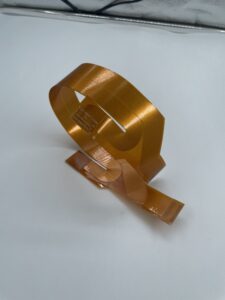
Critical Supporting Materials in Flex PCB Performance
Beyond the base substrate, several other material components significantly impact the performance and reliability of flexible circuits. Understanding these elements is essential for optimizing advanced flex PCB material options in any design.
Advanced Adhesive Systems
Adhesives serve as the critical bonding agent between copper foil and the flexible substrate in many Flex PCB constructions. Modern adhesive systems have evolved significantly, offering improved performance in several key areas:
- Thermal resistance adhesives capable of withstanding lead-free soldering temperatures
- Low-outgassing formulations for vacuum and space applications
- Flame-retardant options meeting UL 94 V-0 requirements
- Improved flexibility for dynamic bending applications
While adhesiveless laminates (where copper is directly bonded to the substrate) offer superior performance for high-reliability applications, advanced adhesives continue to play an important role in many flex circuit designs, particularly for cost-sensitive applications.
Coverlay and Surface Finishes
The protective outer layer of a Flex PCB, typically a coverlay (polyimide film with adhesive) or liquid photoimageable (LPI) solder mask, provides essential protection while maintaining flexibility. Advanced coverlay materials offer:
- Thinner profiles for improved flexibility (down to 12.5μm film with 15μm adhesive)
- Enhanced resistance to cracking during dynamic flexing
- Improved laser processing capability for precise openings
- Better chemical resistance for harsh environments
Surface finishes for Flex PCBs have also evolved, with options including:
- ENIG (Electroless Nickel Immersion Gold) for excellent surface planarity
- ENEPIG (Electroless Nickel Electroless Palladium Immersion Gold) for superior solderability and wire bonding
- Immersion tin for cost-effective performance
- Hard gold for wear-resistant switch applications
The Evolution of Rigid-Flex Technology
Combining the benefits of both rigid and flexible circuit technologies, rigid-flex PCBs represent one of the most significant advancements in circuit design. These hybrid structures incorporate both flexible and rigid materials in a single interconnected package, eliminating the need for connectors between separate boards.
Advanced rigid-flex designs leverage materials like:
- High-performance FR-4 and polyimide laminates
- No-flow prepregs for improved layer-to-layer registration
- Special adhesive systems designed to bond dissimilar materials
- Controlled impedance designs for high-speed signal integrity
This technology proves invaluable in space-constrained environments where both flexibility and structural stability are required, such as smartphone cameras, medical implants, and aerospace control systems. At Flex Plus, our 2-12 layer rigid-flex PCB capabilities enable the design of complex three-dimensional electronic assemblies that would be impossible with traditional circuit technologies.
Cost-Benefit Analysis: Investing in Advanced Materials
When evaluating advanced flex PCB material options, manufacturers and designers must balance performance requirements against cost considerations. While premium materials like LCP and modified polyimides command higher prices than standard options, their benefits often justify the investment through:
Enhanced Product Reliability: Higher-grade materials typically offer superior durability and longer service life, reducing warranty claims and field failures. For mission-critical applications like medical implantables or autonomous vehicle systems, this reliability is non-negotiable.
Improved Miniaturization: Advanced materials enable thinner circuit constructions and finer feature sizes, allowing for smaller end products with enhanced functionality. This miniaturization creates competitive advantages in markets where size and weight are critical differentiators.
Superior Signal Integrity: High-performance materials maintain signal integrity at higher frequencies, enabling faster data transmission rates and improved system performance. As data rates continue to increase across industries, this benefit becomes increasingly valuable.
Extended Operating Environments: Premium materials typically offer wider operating temperature ranges and better resistance to environmental factors like humidity and chemicals. This expanded capability enables deployment in harsh environments without compromising performance.
Simplified Manufacturing: Some advanced materials, particularly adhesiveless laminates, can actually reduce overall manufacturing complexity by eliminating processing steps and improving yields. These efficiency gains can offset higher material costs.
For industries like electric vehicles, medical devices, and aerospace, where performance and reliability requirements are stringent, investing in premium flex circuit materials represents a sound strategic decision. The initial cost premium typically represents a small percentage of the overall product value while delivering significant performance advantages.
Conclusion: Informed Material Selection Drives Innovation
As electronic devices continue to evolve toward greater functionality in smaller packages, flexible printed circuits have become indispensable enablers of innovation. The landscape of advanced flex PCB material options continues to expand, offering engineers unprecedented choices for optimizing their designs.
For designers and manufacturers seeking competitive advantages in their electronic products, staying informed about these material advances is not merely beneficial—it’s essential. The right material selection can transform electronic design possibilities, enabling products that were previously unimaginable. Choosing the optimal material is a competitive advantage that cannot be overlooked.
At Flex Plus, our two decades of experience in advanced flexible circuit manufacturing has taught us that material selection is often the critical foundation upon which successful designs are built. Our certified manufacturing processes for industries ranging from medical devices to aerospace rely on precision material selection tailored to each application’s unique requirements.
Whether you’re developing next-generation wearable medical devices, designing compact electronics for electric vehicles, or pushing the boundaries of telecommunications equipment, understanding and leveraging advanced flex PCB material options will be key to your success. By partnering with experienced flexible circuit manufacturers who understand these materials’ nuances, you position your products for success in increasingly competitive global markets.
The flexible circuit revolution continues to advance, and those who master these advanced materials will lead the next wave of electronic innovation.