
In an era where electronics are becoming increasingly compact yet more powerful, a silent revolution is reshaping the industry from within. Flexible COB technology, short for Chip-on-Board on flexible substrates, represents one of the most significant advancements in electronic packaging that most people have never heard about. This groundbreaking approach integrates bare semiconductor dies directly onto flexible circuit boards, eliminating traditional packaging and creating ultra-thin, bendable electronic systems that were once thought impossible.
Unlike conventional packaging methods where chips come pre-housed in plastic or ceramic cases before being mounted on circuit boards, flexible COB technology bonds unpackaged silicon dies directly to flexible substrates. These bare chips are then wire-bonded and encapsulated with protective materials, creating a seamless integration between the electronic components and the flexible foundation they rest upon. The result? Remarkably thin, lightweight, and pliable electronic systems that can conform to three-dimensional spaces while delivering uncompromised performance.
This innovative approach to electronic packaging is quietly transforming everything from medical implants to foldable smartphones, yet remains largely unknown outside specialized engineering circles. As we delve deeper into flexible COB technology, we’ll discover how this unsung hero of modern electronics is enabling the next generation of devices that are reshaping our world.
Breaking Boundaries with Flexible COB Technology
The advantages of flexible COB technology extend far beyond simple miniaturization. By integrating chips directly onto flexible substrates, engineers have unlocked a cascade of benefits that address longstanding challenges in electronics manufacturing.
Perhaps the most obvious advantage is the dramatic space savings. Traditional packaged components require significantly more real estate than their bare dies. When these chips are mounted directly to flexible substrates using COB techniques, the overall thickness can be reduced by up to 70%. This ultra-thin profile enables electronics to fit into previously inaccessible spaces or conform to curved surfaces that rigid boards cannot accommodate.
“Flexible COB technology represents a paradigm shift in how we approach electronic design,” notes an industry expert. “We’re no longer constrained by the rigid, bulky packages of traditional components. Instead, we can create electronics that bend, flex, and adapt to their environment.”
The benefits extend beyond mere compactness. Flexible COB technology dramatically enhances functionality through improved thermal management. Without bulky packaging materials insulating the chips, heat dissipates more efficiently into the substrate and surrounding environment. This improved thermal performance allows components to operate at higher power levels without overheating, extending device lifespan while enabling more powerful applications.
Another crucial advantage lies in reliability. Traditional electronic assemblies rely on numerous solder joints and interconnects—each representing a potential failure point. Flexible COB technology reduces these connection points significantly, with direct wire bonding from the chip to the substrate creating more robust electrical pathways. The result is enhanced durability, particularly in applications subject to vibration, thermal cycling, or mechanical stress.
The environmental implications are equally compelling. By eliminating individual plastic or ceramic packages for each component, flexible COB technology reduces material usage and potential e-waste. As the electronics industry faces mounting pressure to address sustainability concerns, this reduction in packaging materials represents a meaningful step toward greener manufacturing practices.
These advantages have made flexible COB technology particularly valuable across diverse industries. In automotive electronics, flexible COB solutions enable lightweight, space-saving control modules for electric vehicles, contributing to improved range and efficiency. The technology finds natural applications in Head-Up Displays, wing mirrors, side cameras, parking sensors, and various safety systems where space constraints are significant challenges.
Medical device manufacturers have embraced flexible COB technology for implantable devices, wearable health monitors, and diagnostic equipment. The biocompatibility of certain flexible substrates, combined with the ultra-thin profiles achievable through COB integration, makes these solutions ideal for patient-interfacing technologies where comfort and reliability are paramount.
In telecommunications, flexible COB technology powers the miniaturization of components in smartphones, enabling thinner devices with larger batteries. The same principles apply to wearable electronics, where flexible COB solutions create lightweight, comfortable devices that can conform to the human body while delivering sophisticated functionality.
Engineering Excellence: Standards and Future Potential
The remarkable capabilities of flexible COB technology don’t come without stringent engineering challenges and quality standards. As with any advanced manufacturing process, reliability depends on precise execution and adherence to established industry protocols.
The reliability of flexible COB technology is governed by multiple international standards. IPC-6013, the dedicated standard for flexible printed circuits, provides comprehensive guidelines for manufacturing and testing flexible electronic assemblies. This standard defines acceptable quality levels for various applications, from consumer electronics to mission-critical medical and aerospace systems.
Thermal management represents one of the most significant engineering considerations in flexible COB implementation. Without proper thermal design, the heat generated by directly mounted chips could degrade the flexible substrate or cause premature component failure. Engineers address this challenge through sophisticated thermal simulation, strategic placement of thermal vias, and the integration of specialized heat-dissipating layers within the flexible substrate structure.
The reliability testing for flexible COB assemblies is particularly rigorous. Dynamic bend testing subjects these assemblies to thousands of flexing cycles, ensuring they maintain electrical integrity through repeated movement. Thermal cycling tests verify performance across extreme temperature variations, while humidity and environmental testing confirm resistance to moisture and contaminants.
“What makes flexible COB technology so remarkable from an engineering perspective is the precision required at every stage,” explains a senior engineer. “We’re working with wire bonds that are thinner than a human hair, controlling encapsulation thickness to within microns, all while ensuring the final assembly remains flexible without compromising electrical performance.”
Research continues to push flexible COB technology toward even more impressive capabilities. Multi-layered flexible circuits with embedded COB components promise to further increase functional density, allowing more complex systems to fit into even smaller spaces. Advances in materials science are yielding new substrate options with enhanced flexibility, improved thermal conductivity, and better environmental resistance.
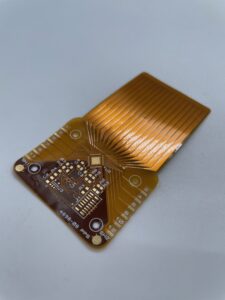
Perhaps most exciting is the potential for recyclable electronic devices. As researchers develop biodegradable flexible substrates compatible with COB processes, the vision of truly sustainable electronics comes closer to reality. These environmentally friendly materials, combined with the reduced packaging waste inherent to COB technology, could significantly reduce the environmental footprint of electronic devices.
Pioneering Innovation Through Flexible Expertise
At the forefront of this technological revolution stands Flex Plus (Xiamen) Co., Ltd, a leading pioneer in flexible PCB manufacturing and COB integration since 2004. With over two decades of specialized experience, Flex Plus has developed exceptional capabilities in flexible substrate COB technology that exemplify the principles discussed throughout this article.
What distinguishes true leaders in flexible COB technology is their ability to overcome the inherent challenges of working with flexible substrates. Unlike rigid boards that remain stable during processing, flexible circuits present unique manufacturing difficulties that require specialized expertise and equipment. Flex Plus has mastered these challenges through innovations like their proprietary magnetic fixture technology, which solves the problem of uneven flexible substrates during the COB process.
The precision achieved by industry leaders in this field is remarkable. At Flex Plus, die bonding precision controls wafer offset angle tolerance within ±5°—far exceeding industry standards. Their micron-level precision packaging maintains COB and encapsulation thickness tolerance within 50-100μm (±25-50μm), while their ultra-fine dam process achieves encapsulation thickness tolerance of ±5μm.
This level of precision transforms what’s possible across numerous industries. In low-altitude airspace applications, flexible COB technology enables lighter, more compact control systems for drones and electric vertical takeoff and landing (eVTOL) vehicles. Medical device manufacturers leverage these capabilities to create thinner, more comfortable wearable monitors and implantable technologies. Augmented reality developers use flexible COB solutions to build lightweight, comfortable AR glasses with advanced functionality.
The integration of flexible PCB manufacturing expertise with advanced COB capabilities creates a powerful synergy that accelerates innovation. By controlling the entire process from flexible substrate production through chip mounting, wire bonding, and encapsulation, leaders like Flex Plus ensure consistency and reliability that wouldn’t be possible through fragmented supply chains.
This comprehensive approach to flexible COB technology empowers product designers to reimagine what’s possible. Rather than adapting their visions to accommodate the limitations of traditional rigid electronics, they can now create devices that truly conform to human needs and environmental constraints. The result is a new generation of electronics that bend, flex, and adapt while delivering unprecedented functionality in previously impossible form factors.
The Transformative Impact of Flexible COB Technology
As we look toward the future of electronics, flexible COB technology stands as a transformative force reshaping our relationship with technology. By breaking free from the rigid constraints of traditional electronic packaging, this innovative approach enables devices that adapt to human needs rather than forcing humans to adapt to technological limitations.
The ultra-thin revolution enabled by flexible COB technology extends far beyond mere miniaturization. It represents a fundamental shift in how we conceptualize and interact with electronic devices. When electronics can bend, conform, and integrate seamlessly into our environment, the boundary between technology and everyday life begins to dissolve. Medical monitors that feel like a second skin, displays that fold into pockets, and electronics that curve around architectural elements all become not just possible but practical.
The sustainability implications are equally profound. By reducing material usage, minimizing interconnect points, and enabling more efficient designs, flexible COB technology contributes to greener electronics with extended lifespans and reduced environmental impact. As global attention focuses increasingly on electronic waste, these advances offer a promising path toward more sustainable technological development.
For forward-thinking companies like Flex Plus, flexible COB technology represents not just a manufacturing capability but a philosophy of innovation. Their vision of being the most trusted and innovative flexible PCB manufacturer globally aligns perfectly with the transformative potential of this technology. By enabling technological advancement through superior flexible circuit solutions, they drive progress across industries while maintaining environmental responsibility.
As consumers, we rarely see or think about the inner workings of our devices. The flexible COB technology powering tomorrow’s electronics remains largely invisible to end users. Yet this unseen innovation enables the visible magic of foldable displays, ultrathin wearables, and seamlessly integrated smart devices that increasingly enhance our lives.
The ultra-thin revolution is just beginning. As flexible COB technology continues to advance, we can expect even more remarkable devices that challenge our preconceptions about electronics. The future belongs to technology that bends rather than breaks, adapts rather than constrains, and empowers rather than complicates. Flexible COB technology, though you may never have heard of it before today, will undoubtedly shape the devices you’ll hold tomorrow.