
The fitness tracker on your wrist. The foldable smartphone in your pocket. The smart medical patch monitoring your vital signs. These aren’t science fiction—they’re real products powered by flexible electronics manufacturing, a technology that has quietly revolutionized how we design and build electronic devices.
For engineers and procurement specialists working in established enterprises, understanding the journey from laboratory innovation to mass-produced wearable devices isn’t just fascinating—it’s essential. As your company evaluates manufacturing partners for high-volume flexible PCB solutions, knowing how these technologies scale from prototype to production becomes a critical competitive advantage.
The Evolution from Rigid to Flexible: A Manufacturing Revolution
Traditional rigid printed circuit boards served us well for decades, but they imposed fundamental limitations on device design. You couldn’t bend them, fold them, or conform them to curved surfaces. Enter flexible electronics manufacturing—a paradigm shift that transformed what’s possible in electronic device design.
At FlexPlus, we’ve witnessed this evolution firsthand over 20+ years of specialized manufacturing. The transition from rigid to flexible wasn’t simply about making circuits bendable. It represented a complete reimagining of manufacturing processes, materials science, and quality control methodologies. Today’s flexible electronics demand precision at the micron level while maintaining reliability through thousands of bend cycles—requirements that push manufacturing capabilities to their limits.
The real breakthrough came when manufacturers developed scalable processes that could maintain the exacting standards required for automotive, medical, and aerospace applications while achieving the cost efficiencies needed for consumer electronics. This balance between precision and scalability defines modern flexible electronics manufacturing.
The Core Manufacturing Processes: Building Flexibility into Every Layer
Flexible electronics manufacturing relies on several interconnected processes, each critical to the final product’s performance and reliability. Understanding these processes helps you evaluate potential manufacturing partners and optimize your designs for manufacturability.
Printing-Based Deposition and Patterning
Unlike traditional PCB manufacturing that relies heavily on etching, advanced flexible electronics increasingly incorporate printing-based deposition techniques. These methods apply conductive, dielectric, and functional materials directly onto flexible substrates with remarkable precision. Screen printing, inkjet printing, and aerosol jet printing each offer distinct advantages depending on the required resolution, material properties, and production volumes.
For high-volume production, the key lies in achieving consistent deposition across thousands of square meters of substrate material. At FlexPlus, our manufacturing processes maintain line widths down to 0.05mm (2mil) with exceptional consistency—critical for high-density interconnect designs in smartphones and wearables.
Substrate Preparation and Surface Treatment
The substrate forms the foundation of any flexible circuit. Proper surface preparation ensures optimal adhesion between the substrate and subsequent layers—a factor directly impacting long-term reliability. Polyimide (PI) remains the gold standard for most applications, offering excellent thermal stability (400°C) and mechanical properties. However, emerging applications in wearables increasingly leverage specialized materials like medical-grade thermoplastic polyurethane (TPU), which FlexPlus has pioneered for next-generation devices requiring ultimate flexibility and biocompatibility.
Surface treatments activate the substrate, improving adhesion while maintaining the material’s inherent flexibility. This step is particularly critical for multilayer flexible PCBs, where delamination between layers would prove catastrophic in field applications.
Curing and Thermal Processing
After material deposition, proper curing ensures the conductive traces and dielectric layers achieve their specified electrical and mechanical properties. Thermal processing must be carefully controlled—too little heat results in incomplete curing and poor conductivity; too much heat can damage the flexible substrate or cause dimensional changes that affect registration in subsequent layers.
For multilayer constructions, this becomes even more complex. Each layer must be processed without degrading previously manufactured layers, requiring precise thermal profiles and often specialized equipment capable of zone-controlled heating.
Roll-to-Roll Workflow Integration
The true efficiency breakthrough in flexible electronics manufacturing comes from roll-to-roll (R2R) processing. Unlike sheet-by-sheet manufacturing, R2R continuously processes flexible substrates through sequential manufacturing stations—deposition, patterning, curing, and inspection—in a single integrated workflow.
This approach dramatically reduces handling time, minimizes contamination risks, and enables the production of exceptionally long flexible circuits. FlexPlus‘s R2R capabilities extend to 3-4 meters for specialized applications, making us a preferred partner for automotive harness manufacturers and industrial sensor arrays requiring extended lengths impossible with traditional manufacturing methods.
Materials Science: The Foundation of Flexibility
The materials used in flexible electronics directly determine device performance, reliability, and manufacturability. For engineers specifying flexible PCB solutions, understanding these material choices helps optimize designs for both function and cost.
Conductive Inks and Traces
Modern flexible electronics rely on sophisticated conductive inks rather than traditional copper foil lamination alone. Silver nanoparticle inks offer excellent conductivity and can be printed at fine resolutions, making them ideal for high-density applications. Copper-based inks provide cost advantages for larger feature sizes. Carbon-based conductive inks, while offering lower conductivity, excel in applications requiring transparency or extreme flexibility.
The selection of conductive materials impacts more than just electrical performance. It affects the circuit’s mechanical properties, its ability to withstand repeated flexing, and its compatibility with subsequent assembly processes. For wearable devices requiring both high flex cycles and biocompatibility, this becomes a critical engineering trade-off.
Flexible Substrates: Beyond Polyimide
While polyimide dominates flexible PCB manufacturing, specialized applications increasingly require alternative substrate materials. FlexPlus‘s breakthrough TPU circuit technology demonstrates this evolution. TPU substrates enable applications impossible with traditional PI materials—ultra-thin medical wearables, stretchable electronics for beauty tech devices, and conformable circuits for augmented reality headsets.
Each substrate material brings specific advantages and constraints. Polyimide offers superior thermal stability and chemical resistance, making it ideal for automotive and industrial applications. TPU provides unmatched flexibility and biocompatibility for medical and wearable devices. The key is matching substrate properties to application requirements while maintaining manufacturability at production volumes.
Functional Inks and Dielectric Materials
Beyond conductors, flexible electronics require precisely formulated dielectric materials, adhesives, and protective coatings. These materials must maintain their properties through thermal cycling, mechanical stress, and environmental exposure while remaining compatible with the flexible substrate and conductive traces.
Dielectric inks enable multilayer constructions by providing electrical isolation between conductive layers. Their thickness, dielectric constant, and flexibility directly impact circuit performance and reliability. For rigid-flex designs combining rigid boards with flexible interconnects, managing the transition zones between materials becomes particularly critical.
Scaling Production: Roll-to-Roll Manufacturing Excellence
Roll-to-roll manufacturing represents the pinnacle of flexible electronics production efficiency, but it also presents unique challenges that separate experienced manufacturers from those still developing their capabilities.
Achieving Consistent Registration and Alignment
In R2R processing, maintaining precise registration between layers across hundreds of meters of substrate requires sophisticated tension control, advanced vision systems, and real-time process monitoring. Registration errors as small as 50 microns can cause electrical opens or shorts in high-density designs.
FlexPlus‘s R2R systems incorporate advanced feedback control mechanisms that continuously monitor and adjust registration throughout the manufacturing process. This ensures that the final circuit at meter 200 maintains the same precise alignment as the circuit at meter 1—critical for high-yield production of automotive and medical devices where every unit must meet exacting standards.
Defect Detection and Management
In continuous R2R processing, a single defect doesn’t necessarily scrap an entire roll. Advanced in-line inspection systems identify defects in real-time, enabling strategic cutting and rework that maximizes material utilization. Automated optical inspection (AOI) systems scan every square millimeter of substrate, detecting opens, shorts, and dimensional variations that might compromise functionality.
The key to cost-effective R2R manufacturing lies in predictive defect management. By analyzing defect patterns, experienced manufacturers identify upstream process variations before they generate significant scrap—a capability that comes only with years of specialized experience and comprehensive process control.
Process Control and Environmental Management
R2R manufacturing requires stringent environmental control. Temperature and humidity variations affect material properties, registration accuracy, and curing behavior. Cleanroom environments prevent contamination that could cause electrical failures or mechanical defects.
At FlexPlus, our 16,000+ square meter facility maintains precise environmental controls throughout the manufacturing floor. This investment in infrastructure directly translates to higher yields and more consistent product quality—factors that become increasingly critical as your production volumes scale.
Cost Advantages and Time-to-Market Benefits
When properly implemented, R2R manufacturing delivers significant cost advantages over sheet-by-sheet processing. Material utilization improves through continuous processing. Labor costs per unit decrease dramatically. Setup times for production runs shrink as processes become more automated.
For product development teams, these advantages accelerate time-to-market. FlexPlus‘s standard turnaround of one week (three days for emergency requests) enables rapid design iteration while maintaining the quality standards required for final production. This flexibility proves invaluable when developing new products in competitive markets where early entry provides significant advantages.
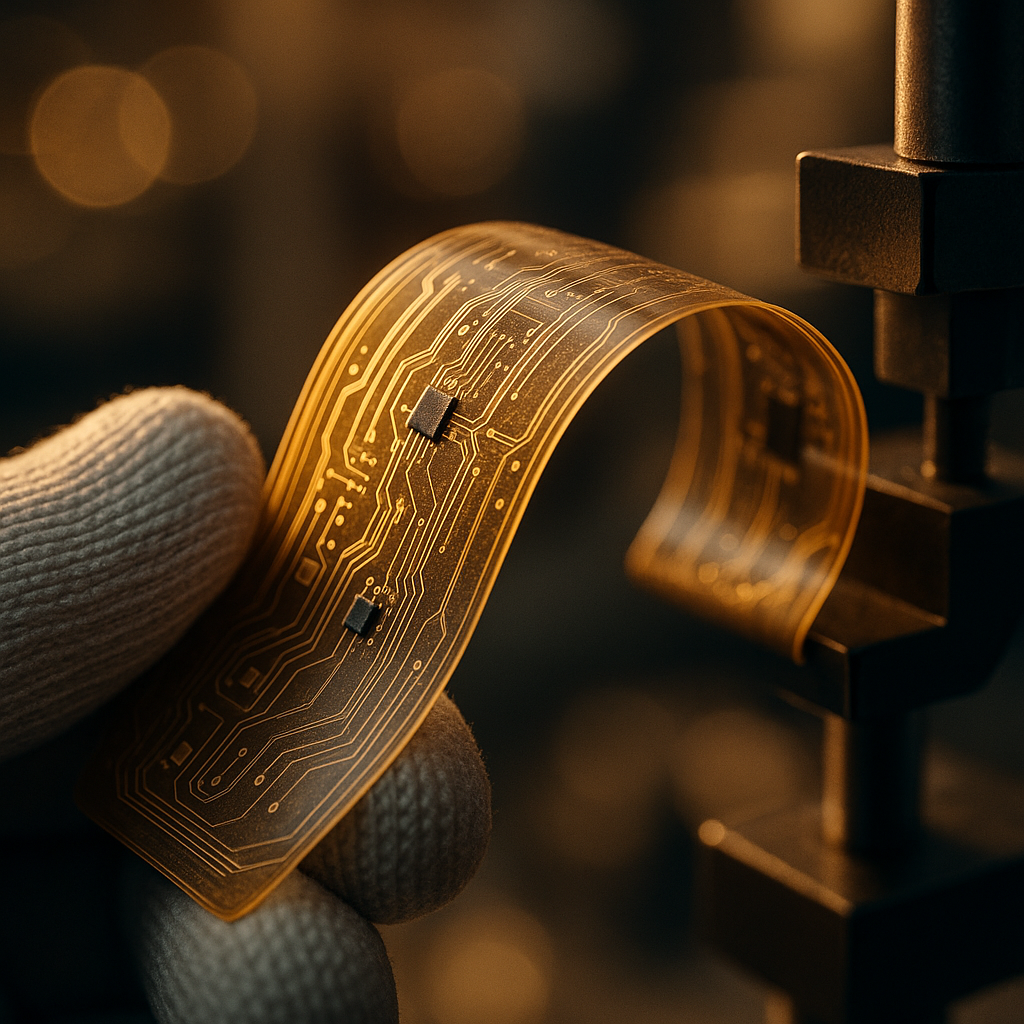
Ensuring Reliability: Testing and Quality Control
For engineers specifying flexible PCBs for automotive, medical, or aerospace applications, reliability isn’t negotiable—it’s essential. Comprehensive testing and quality control separate consumer-grade flexible circuits from certified solutions suitable for mission-critical applications.
Mechanical Durability and Flex Testing
Flexible circuits must survive thousands—sometimes millions—of flex cycles without electrical or mechanical failure. Accelerated life testing subjects circuits to repeated bending at specified radii and frequencies, validating their durability under real-world conditions. For dynamic flex applications like printer carriages or robotic arms, this testing becomes even more critical.
FlexPlus‘s testing protocols align with international standards while incorporating application-specific requirements from our diverse industry experience. Automotive applications might require testing at extreme temperatures. Medical devices demand biocompatibility validation. Military and aerospace applications require testing under vibration and shock conditions that would destroy conventional circuits.
Environmental Stability and Long-Term Reliability
Beyond mechanical stress, flexible circuits must withstand environmental factors—temperature cycling, humidity exposure, chemical contact, and UV radiation. Comprehensive environmental testing validates that circuits maintain their electrical and mechanical properties throughout their intended service life.
For medical device manufacturers requiring ISO 13485 certification or automotive suppliers needing IATF 16949 compliance, this testing isn’t optional—it’s a regulatory requirement. FlexPlus‘s full complement of international certifications (ISO 9001, ISO 13485, IATF 16949, ISO 14001) provides assurance that our testing and quality control processes meet or exceed industry standards.
Yield Optimization and Quality Control
In high-volume production, yield directly impacts cost and delivery timelines. Mature manufacturers achieve yields exceeding 95% through comprehensive process control, advanced inspection systems, and continuous improvement methodologies.
Our approach to yield optimization begins with Design for Manufacturing (DFM) analysis during the quotation phase. By identifying potential manufacturing challenges before production begins, we reduce prototype iteration cycles and accelerate time-to-market while maintaining quality standards. This engineering partnership approach reflects our commitment to customer success rather than simply producing boards to specification.
Market Trends and Future Opportunities
The flexible electronics market continues its rapid expansion, driven by applications that were impossible just a few years ago. Understanding these trends helps you position your products for future opportunities while making informed decisions about manufacturing partnerships.
Automotive Electronics: The EV Revolution
Electric vehicles are driving unprecedented demand for flexible and rigid-flex PCBs. Battery management systems, electric motor controls, advanced driver assistance systems (ADAS), and in-vehicle infotainment all rely on flexible circuits that reduce weight, improve reliability, and enable complex three-dimensional packaging impossible with rigid boards.
For automotive suppliers, partnering with IATF 16949-certified manufacturers ensures compliance with stringent automotive quality standards while accessing the advanced capabilities required for next-generation vehicle electronics.
Medical Devices: Wearables and Implantables
The medical device industry increasingly adopts flexible electronics for wearable monitors, implantable sensors, and therapeutic devices. These applications demand biocompatible materials, ultra-thin profiles, and exceptional reliability—requirements that push manufacturing capabilities to their limits.
FlexPlus‘s ISO 13485 certification and medical-grade TPU circuit technology position us as a preferred partner for medical device manufacturers developing next-generation products. Our biocompatible flexible PCBs enable devices that patients can wear comfortably for extended periods, opening new possibilities for continuous health monitoring.
Consumer Electronics: Beyond Smartphones
While smartphones drove initial demand for flexible PCBs, emerging applications in wearables, AR/VR devices, and smart home products represent significant growth opportunities. These applications prioritize miniaturization, aesthetic integration, and cost optimization—factors that benefit from experienced manufacturing partners who understand both the technical and commercial aspects of volume production.
Stretchable and Conformable Electronics: The Next Frontier
The future of flexible electronics extends beyond simple bending to include stretchable and conformable circuits that adapt to complex three-dimensional surfaces. These technologies enable entirely new product categories—electronic textiles, advanced prosthetics, and human-machine interfaces that seamlessly integrate with the human body.
As pioneers in TPU circuit technology and flexible COB integration, FlexPlus continues investing in these emerging technologies, ensuring our partners access cutting-edge capabilities as they develop next-generation products.
Practical Takeaways for Industry Professionals
For design engineers, procurement specialists, and project managers evaluating flexible PCB manufacturing partners, several key considerations should guide your decision-making:
Partner with Experienced Manufacturers: Twenty-plus years of specialized experience translates to better yields, faster time-to-market, and more reliable products. Manufacturers who offer direct communication with production engineers—rather than sales representatives—provide the technical expertise needed for successful product development.
Prioritize Certified Processes: International certifications (ISO 9001, ISO 13485, IATF 16949) aren’t just paperwork—they represent proven quality management systems and process controls that ensure consistent product quality at production volumes.
Leverage DFM Support: Comprehensive Design for Manufacturing analysis during the quotation phase identifies potential issues before they become costly problems during production. This engineering partnership approach accelerates development while reducing risk.
Consider Full-Service Capabilities: Manufacturers offering complete services from bare board fabrication through final assembly (PCBA) reduce vendor count, simplify supply chain management, and minimize quality issues from interface problems between multiple suppliers.
Plan for Scalability: Your prototype manufacturer should also be your production partner. Manufacturers with both rapid prototyping capabilities and high-volume production capacity enable seamless scaling from development through mass production without the disruption of changing suppliers.
As flexible electronics continue transforming product design across industries, the manufacturing partnerships you establish today will determine your competitive position tomorrow. Whether you’re developing automotive electronics, medical devices, or consumer products, choosing experienced manufacturing partners with comprehensive capabilities positions your products for success in increasingly competitive markets.
The journey from laboratory innovation to daily wearable devices required decades of advancement in materials science, manufacturing processes, and quality control methodologies. For your next flexible PCB project, partnering with manufacturers who have traveled this entire journey—and continue pushing the boundaries of what’s possible—provides the foundation for bringing your innovative designs to life with confidence and reliability.