
The electronics industry stands at a pivotal moment. As devices become smaller, smarter, and more integrated into our daily lives, traditional circuit board designs struggle to meet the demands of modern applications. Enter hybrid circuit technology—a revolutionary approach that merges the structural integrity of rigid PCBs with the flexibility of flexible circuits into rigid-flex PCBs. This innovation isn’t just an incremental improvement; it’s fundamentally transforming how engineers design, manufacture, and deploy electronic systems across industries.
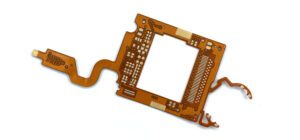
At its core, hybrid circuit technology represents a departure from the either-or mentality that has long dominated electronics design. Engineers no longer need to choose between the stability of rigid boards and the adaptability of flexible circuits. Instead, rigid-flex PCBs combine both materials within a single board structure, creating assemblies that can bend, fold, and conform to complex three-dimensional spaces while maintaining critical structural support where needed. This seamless integration eliminates the connectors and cables that traditionally linked separate circuit boards, reducing potential failure points and creating more reliable systems.
The transformation goes beyond simple material combination. Hybrid circuits enable design possibilities that were previously impossible or economically unfeasible. A rigid-flex board can twist around corners, fold into compact packages, and support high-density component placement on rigid sections—all within a single cohesive assembly. This capability has opened doors for innovation in applications where space is premium, weight matters, and reliability cannot be compromised—principles that align closely with folding electronics design strategies.
Unlocking Critical Advantages Across Industries
The benefits of hybrid circuit technology manifest most dramatically in industries pushing the boundaries of what’s technologically possible. In electric vehicles, where every millimeter of space and every gram of weight affects performance and efficiency, rigid-flex PCBs have become essential. Dashboard displays, advanced driver assistance systems, and battery management modules all leverage hybrid circuits to achieve the compact, lightweight designs that modern EVs demand. A single rigid-flex assembly can replace multiple traditional boards connected by cables, reducing assembly complexity while improving signal integrity and mechanical reliability.
Medical device manufacturers have embraced hybrid circuits with particular enthusiasm. Implantable devices like heart monitors and neural stimulators require circuits that can flex with the body’s natural movements while maintaining unwavering electrical performance. The elimination of connectors—often the weakest link in traditional designs—significantly enhances reliability in applications where failure isn’t just inconvenient but potentially life-threatening. Understanding medical-grade material biocompatibility becomes equally critical in these healthcare applications. ISO 13485-certified flexible and rigid-flex solutions ensure these critical medical applications meet the stringent quality and safety standards the healthcare industry demands.
Design flexibility stands as perhaps the most transformative advantage of hybrid circuit technology. Engineers can now create three-dimensional assemblies that conform to product enclosures rather than forcing products to accommodate flat circuit boards. This freedom enables innovative industrial designs in telecommunications equipment, where optical transceiver modules benefit from circuits that maximize space efficiency in dense rack-mount configurations. The ability to fold a circuit board into a compact Z-shape or wrap it around cylindrical structures opens possibilities that simply didn’t exist with traditional rigid-only or flexible-only designs.
Component count reduction represents another significant benefit. Each connector eliminated from a design removes a potential failure point, reduces assembly time, and lowers overall manufacturing costs. In high-volume production environments, these savings multiply rapidly. A smartphone manufacturer might eliminate dozens of connectors across their product line by implementing rigid-flex designs, translating to millions in annual savings while simultaneously improving product reliability.
Space efficiency becomes critical in applications where miniaturization drives competitive advantage. Wearable devices, augmented reality glasses, and advanced consumer electronics all demand circuits that pack maximum functionality into minimal volume. Hybrid circuits enable three-dimensional packaging strategies that would require multiple separate boards in traditional designs. This capability allows device manufacturers to create sleeker, lighter products without sacrificing features or performance.
Revolutionary Applications Driving Industry Transformation
The true impact of hybrid circuit technology becomes clear when examining specific applications where it serves as a genuine game-changer. Wearable computing devices illustrate this perfectly. Smartwatches, fitness trackers, and health monitoring wearables require circuits that can withstand constant flexing while maintaining electrical integrity. Traditional rigid boards would crack under such stress, while purely flexible circuits lack the structural support needed for component mounting—challenges that proper flex PCB layout techniques successfully address. Rigid-flex solutions solve this challenge elegantly, placing delicate components on rigid sections while allowing flexible sections to conform to the curved surfaces of wrists or other body parts.
Assistive technologies represent another frontier where hybrid circuits are making profound differences. Smart helmets for F1 racing integrate heads-up displays, communication systems, and biometric sensors—all requiring sophisticated electronics in a space where weight and profile matter tremendously. Similarly, intelligent helmets for mining and mineral extraction applications need rugged, reliable circuits that can survive harsh industrial environments while providing critical safety information to workers. The three-dimensional design freedom of rigid-flex PCBs allows these devices to integrate seamlessly into helmet structures without compromising comfort or safety.
The low-altitude airspace revolution—encompassing drones, electric vertical takeoff and landing (eVTOL) vehicles, air taxis, and aerial logistics systems—depends heavily on hybrid circuit technology. These applications demand extreme reliability combined with minimal weight. A drone’s flight controller might use rigid sections for processor mounting and sensor integration while employing flexible sections to route signals to motors distributed across the airframe. Every gram saved through intelligent circuit design translates directly to increased payload capacity or extended flight time. The elimination of heavy connectors and cable harnesses contributes significantly to these weight savings while simultaneously improving reliability by reducing vibration-prone connection points.
Internet of Things (IoT) devices benefit enormously from hybrid circuits’ space efficiency and design flexibility. Smart sensors deployed in industrial settings often face installation constraints—they might need to fit into tight spaces, conform to curved surfaces, or withstand mechanical stress. A rigid-flex design allows the processor and power management components to sit on a rigid section while the sensor interfaces extend on flexible arms that can bend to optimal positions—design approaches detailed in comprehensive flexible PCB design guides. This adaptability makes IoT deployment practical in situations where traditional circuit boards would fail or require costly custom enclosures.
The beauty tech industry has emerged as an unexpected but significant beneficiary of hybrid circuit technology. Tech-driven beauty gadgets—from LED face masks to ultrasonic skin care devices—require circuits that conform to facial contours while housing sophisticated control electronics. Rigid-flex designs allow these devices to feel comfortable against the skin while integrating the processing power needed for advanced features like customizable treatment programs and smartphone connectivity.
Augmented reality wearables and AI glasses represent perhaps the most demanding application of hybrid circuit technology. These devices require intense miniaturization, placing high-performance processors, displays, cameras, and sensors into eyeglass-sized packages. The three-dimensional assembly capabilities of rigid-flex circuits prove essential for achieving the compact form factors consumers expect while maintaining the performance needed for compelling AR experiences. Flexible sections route signals between the temple pieces and front frame, while rigid sections support dense component placement for processors and display drivers.
Leading the Innovation Revolution
The advancement of hybrid circuit technology requires more than just manufacturing capability—it demands a philosophical commitment to innovation, quality, and partnership. This is where companies like Flex Plus (Xiamen) Co., Ltd distinguish themselves in the competitive landscape of circuit board manufacturing.
Since 2004, Flex Plus has built its reputation on a foundation of certified excellence, maintaining full compliance with ISO 9001, ISO 13485, IATF 16949, IPC-6013, and ISO 14001 standards. These certifications aren’t merely checkmarks on a compliance list—they represent a systematic commitment to quality that permeates every aspect of the manufacturing process. When medical device manufacturers select Flex Plus for biomedical-compatible flexible PCBs, they’re not just buying circuit boards; they’re partnering with a supplier whose quality management systems align with the stringent requirements of healthcare applications.
The company’s investment in advanced R&D capabilities demonstrates a forward-thinking approach to hybrid circuit technology. Breakthrough innovations like flexible heat dissipation flow channels address emerging thermal management challenges in high-power applications. Transparent PCBs open new possibilities for displays and lighting applications. Ultra-thin designs—achieving overall thickness as slim as 25 microns with gold plating on double-sided flex PCBs—push the boundaries of miniaturization beyond what many considered possible just years ago, as explored in studies on recyclable and healable electronics.
Perhaps most significantly, Flex Plus operates as a true manufacturing partner rather than a broker or trading company. Their 8,000+ square meter factory with dedicated workshops and advanced equipment provides complete manufacturing control from design to delivery. This vertical integration offers customers distinct advantages: consistent quality, faster response times, and the ability to implement design changes quickly without navigating multiple third parties. When engineers need to prototype a new rigid-flex design, they communicate directly with the manufacturing team that will produce it, eliminating the communication gaps that plague broker-based relationships.
The company’s engineering partnership approach aligns perfectly with the demands of hybrid circuit technology. Rigid-flex designs require more sophisticated design-for-manufacturing (DFM) analysis than traditional boards, following stringent flexible PCB design rules to ensure manufacturability. The transition areas between rigid and flexible sections need careful engineering to prevent stress concentrations. Material selection affects both mechanical and electrical performance. Flex Plus provides comprehensive design support from concept to mass production, offering material consultation and technical feedback that helps customers optimize their designs before committing to production tooling.
This collaborative approach proves particularly valuable for companies venturing into hybrid circuits for the first time. An EV manufacturer developing their first integrated dashboard display might lack in-house expertise in rigid-flex design. Flex Plus’s engineering team can evaluate their initial concepts, suggest design modifications that improve manufacturability and reliability, and guide them through material selection decisions. This partnership reduces development risk and accelerates time-to-market—critical factors in competitive industries.
The company’s specialization across diverse industries provides another advantage. Experience with low-altitude airspace applications informs aerospace designs. Knowledge gained from beauty tech products contributes to consumer electronics projects. Medical device expertise translates to other precision applications. This cross-pollination of knowledge enables Flex Plus to bring insights from one industry to solve challenges in another, driving innovation through applied learning.
The Future of Electronics Design
As we look toward the future, hybrid circuit technology’s transformative impact will only intensify. Several trends will drive continued adoption and innovation in rigid-flex PCBs across industries.
Miniaturization pressures will continue increasing as consumers demand more functionality in smaller packages. Smartphones, wearables, and IoT devices will pack additional sensors, processors, and communication modules into ever-tighter spaces. Hybrid circuits provide one of the few viable paths to achieving these density goals without compromising reliability or manufacturability.
The electric vehicle revolution represents a massive growth opportunity for hybrid circuit technology. As EVs transition from early adoption to mainstream acceptance, manufacturers will face intensifying pressure to reduce costs while improving performance. Rigid-flex designs contribute to both goals by reducing assembly complexity, eliminating components, and enabling more efficient packaging of electronic systems. Every new EV model represents dozens of potential applications for hybrid circuits—from battery management systems to advanced sensors to entertainment systems.
Medical technology advancement will drive demand for increasingly sophisticated flexible and rigid-flex solutions. Implantable devices will become smaller and more capable. Wearable health monitors will evolve from simple fitness trackers to comprehensive health management systems, leveraging advances in medical device electronic requirements and ISO 13485 compliance. Surgical tools will integrate more electronics into ever-more-compact packages. Each advancement will challenge circuit board manufacturers to push the boundaries of what’s possible with hybrid designs.
The aerospace and defense sectors will continue exploring hybrid circuits for weight reduction and reliability improvement. Satellites, aircraft systems, and military equipment all benefit from the advantages rigid-flex technology provides. As low-altitude airspace applications mature—particularly eVTOL vehicles and air taxis—demand for certified, highly reliable hybrid circuits will surge.
Industry 4.0 and smart manufacturing initiatives will create new applications for hybrid circuits in industrial control systems. Sensors, controllers, and communication modules will need to integrate into existing machinery and infrastructure, often in constrained spaces with challenging environmental conditions. Rigid-flex designs’ adaptability makes them ideal for these retrofitting applications.
For companies to capitalize on these opportunities, they must partner with manufacturers who combine technical expertise, quality certifications, and manufacturing capabilities. The complexity of hybrid circuit technology means that choosing the right supplier isn’t just about finding the lowest price—it’s about finding a partner who can guide product development, ensure compliance with industry standards, and deliver consistent quality at production volumes, as outlined in comprehensive supplier selection criteria.
The transformation of modern electronics design through hybrid circuit technology is not a future possibility—it’s happening now. Industries from automotive to aerospace, medical to consumer electronics, are discovering that rigid-flex PCBs enable products that would be impossible with traditional approaches. The question for forward-thinking companies isn’t whether to adopt hybrid circuit technology, but how quickly they can integrate it into their product development processes to maintain competitive advantage in rapidly evolving markets.
As electronic systems continue growing more complex, more compact, and more critical to product functionality, hybrid circuit technology will transition from competitive advantage to industry standard. Companies that embrace this transformation today—partnering with qualified manufacturers who bring both technical expertise and quality certifications—will lead their industries tomorrow. The game has changed, and hybrid circuits are writing the new rules.