
The electronics industry stands at a pivotal moment. As we approach 2025, flexible printed circuit boards (FPCBs) have evolved from specialty components to essential building blocks driving innovation across virtually every sector. From electric vehicles navigating our streets to medical devices saving lives, from drones reshaping logistics to wearable tech tracking our health—flexible PCBs make it all possible.
The demand for flexible circuits is surging. Market projections indicate the global flexible electronics market will reach USD 300 billion by 2030, with the flexible PCB segment expected to reach USD 50.90 billion by 2030, growing at a compound annual growth rate of 13.7% from 2025 onward. This explosive growth reflects a fundamental shift in how we design and manufacture electronic products. Engineers and product developers increasingly turn to flexible circuits for their unique advantages: reduced weight, enhanced reliability through fewer connection points, three-dimensional design freedom, and the ability to withstand repeated flexing that would destroy traditional rigid boards.
But here’s the challenge: not all flexible PCB suppliers are created equal. The difference between a mediocre supplier and an exceptional partner can mean the difference between a product that revolutionizes your market and one that fails quality testing. Choosing the right flexible PCB manufacturer isn’t just a procurement decision—it’s a strategic choice that directly impacts your innovation timeline, product quality, and competitive position.
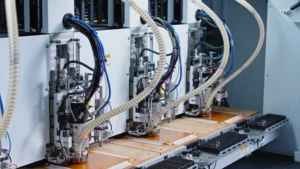
Understanding the Landscape of Top Flexible PCB Suppliers
The flexible PCB industry features several established global players, each bringing distinct strengths to the table. Understanding these leaders helps set benchmarks for what excellence looks like in this specialized manufacturing sector.
Nippon Mektron dominates as one of the world’s largest flexible circuit board manufacturers, with extensive experience serving the automotive and consumer electronics industries. Their strength lies in high-volume production capabilities and mature quality systems developed over decades. Companies choosing Nippon Mektron typically value proven track records and the ability to scale production rapidly.
Young Poong Electronics, headquartered in South Korea, has carved out a strong position in the smartphone and telecommunications sectors. Their expertise in ultra-thin, high-density interconnect flexible circuits makes them a preferred choice for consumer electronics manufacturers pushing the boundaries of miniaturization.
Unimicron Technology and Zhen Ding Technology, both Taiwan-based manufacturers, bring sophisticated technical capabilities to the table. These companies excel in rigid-flex combinations and multilayer flexible circuits, serving customers who need complex interconnection solutions for advanced applications.
Flex Ltd. operates globally with a comprehensive portfolio that extends beyond PCB manufacturing into full electronic manufacturing services. Their integrated approach appeals to customers seeking a one-stop solution from design through assembly.
What unites these industry leaders? Each maintains rigorous certification standards—from ISO 9001 quality management to industry-specific certifications like IATF 16949 for automotive applications. They invest heavily in research and development, continuously advancing materials science, manufacturing processes, and design capabilities. They’ve built global supply chains that ensure reliable material sourcing and consistent production quality across facilities.
But scale and reputation alone don’t guarantee the right fit for every project. The proliferation of flexible PCB applications means your specific requirements—whether for medical devices requiring biocompatibility, electric vehicles demanding automotive-grade reliability, or aerospace applications needing military-spec performance—deserve specialized attention.
Key Considerations for Choosing Your Flexible PCB Partner
Selecting the right flexible PCB supplier requires looking beyond surface-level capabilities. Here are the critical factors that separate truly exceptional partners from merely adequate suppliers:
Quality Assurance and Certifications
Quality isn’t negotiable when it comes to flexible circuits. A single defective board in a medical device could endanger patient safety. A failed flex PCB in an electric vehicle’s critical systems could lead to recalls costing millions. Your supplier’s quality systems form your first line of defense.
Look for manufacturers maintaining comprehensive certification portfolios. ISO 13485 certification is non-negotiable for medical device applications, demonstrating systematic quality management specific to healthcare products. IATF 16949 certification indicates automotive-industry-specific quality systems that go beyond general manufacturing standards. IPC-6013 compliance ensures flexible circuits meet established industry standards for design, materials, and fabrication.
But certifications are just the starting point. Dig deeper into their actual quality control processes. Do they perform automated optical inspection (AOI) at multiple production stages? What’s their first-pass yield rate? How do they handle traceability? Can they provide detailed quality documentation for every production batch?
Real manufacturing excellence means controlling every step in-house rather than outsourcing to subcontractors where quality can slip. When you work directly with a factory rather than through brokers or trading companies, you gain transparency into actual manufacturing processes and direct communication with engineers who can solve problems quickly.
Technical Capabilities and Innovation
The pace of electronic innovation demands suppliers who don’t just manufacture what you design today, but can help you envision what’s possible tomorrow.
Evaluate potential partners on their technical range. Can they fabricate single-layer, double-sided, and multilayer flexible circuits? What’s their capability for rigid-flex combinations? Can they work with specialized materials like polyimide for high-temperature applications, or transparent substrates for optical applications?
Advanced capabilities separate leaders from followers. Ask about their precision specifications—what’s their minimum line width and spacing? Can they handle high-density interconnect (HDI) designs? What thickness ranges can they achieve? Some cutting-edge applications require flexible PCBs as thin as 25 microns, while others need thicker constructions for durability.
Innovation capability matters tremendously. Leading suppliers invest in R&D to develop breakthrough technologies before customers even know they need them. Technologies like flexible chip-on-board (COB) integration, where ultra-thin chips are mounted directly onto flexible substrates, open entirely new product possibilities for applications requiring ultimate miniaturization.
Consider a medical device manufacturer developing a minimally invasive surgical tool. Traditional packaging approaches create bulky, rigid components. A supplier offering flexible COB technology can integrate sensors and processing chips directly into thin, flexible circuits that navigate the human body—achieving functionality impossible with conventional approaches.
Engineering Support and Partnership Approach
The best flexible PCB suppliers function as engineering partners, not just manufacturers taking orders. This distinction becomes critical during product development when design decisions impact manufacturability, reliability, and cost.
Comprehensive design-for-manufacturing (DFM) analysis should be standard practice. Your supplier’s engineers should review your designs, identifying potential issues before production begins. Can your design be manufactured reliably at volume? Are there material choices that would improve performance or reduce cost? Would adjusting bend radii extend product lifetime?
Material consultation demonstrates real expertise. Flexible PCB design involves countless decisions about substrate materials, copper weights, coverlay options, and stiffener choices. An experienced supplier helps you navigate these options based on your specific application requirements—balancing flexibility, durability, thermal performance, and cost.
Prototyping speed matters when you’re racing to market. Top suppliers offer rapid prototyping services delivering functional prototypes in days rather than weeks. This quick turnaround enables iterative design refinement, reducing overall development time and helping you beat competitors to market.
Production Capacity and Scalability
Today’s prototype becomes tomorrow’s production run. Your supplier choice should account for the full product lifecycle from development through volume manufacturing.
Verify actual production capacity. What’s their maximum board size? Can they handle the unusual dimensions your application requires? Some specialized applications—like certain automotive or industrial control systems—require exceptionally long flexible circuits extending several meters. Few manufacturers can accommodate these dimensions.
Scalability matters as your product succeeds. Can your supplier ramp from prototype quantities to thousands of units monthly without compromising quality or lead time? Do they have the production line capacity to support your growth without becoming a bottleneck?
Sheet-by-sheet processing capability offers flexibility that panel-processing approaches can’t match. This manufacturing approach enables cost-effective prototype production while maintaining the ability to scale to volume production using the same processes and equipment—reducing transition risks.
Supply Chain Reliability and Geographic Considerations
Global supply chains face unprecedented challenges. Your flexible PCB supplier’s location, material sourcing practices, and logistics capabilities directly impact your ability to deliver products on schedule.
Geographic proximity to your assembly operations reduces shipping time and costs. However, don’t discount suppliers in other regions who can demonstrate reliable logistics. China’s Xiamen region, for example, has emerged as a flexible PCB manufacturing hub combining technical expertise, modern equipment, and efficient logistics connections to global markets.
Material sourcing stability protects against supply disruptions. Suppliers with established relationships with major material providers—companies like DuPont for polyimide films or leading copper foil manufacturers—maintain more stable material supplies even during industry-wide shortages.
Ask about their customer service model. Will you have dedicated account managers who understand your business? Can you communicate directly with engineers in your time zone? Language barriers and time zone differences can create frustrating delays when you need quick answers.
Integrating Excellence into Your Supplier Selection
The principles that define excellence in flexible PCB manufacturing—certified quality systems, technical innovation, engineering partnership, and complete manufacturing control—should guide your supplier evaluation.
Consider how these principles align with your industry’s specific needs. Electric vehicle manufacturers require suppliers with IATF 16949 certification and proven experience in automotive-grade components that withstand extreme temperature cycling, vibration, and electromagnetic interference. Your EV’s head-up display, camera systems, and sensor arrays depend on flexible circuits that never fail.
Medical device companies need ISO 13485-certified suppliers who understand biocompatibility requirements and can provide the extensive documentation required for regulatory submissions. When developing implantable devices or minimally invasive surgical tools, flexible PCBs must meet stringent reliability standards while enabling unprecedented miniaturization.
Aerospace and defense applications demand suppliers with experience in high-reliability circuits that perform flawlessly in extreme environments. Military-spec compliance, rigorous testing protocols, and complete traceability aren’t optional—they’re prerequisites.
Telecommunications infrastructure providers need suppliers who can deliver high-frequency flexible circuits for next-generation optical transceiver modules, supporting the bandwidth demands of 5G networks and beyond.
Consumer electronics innovators—whether developing augmented reality glasses, smart wearables, or beauty tech devices—require suppliers who combine technical excellence with the flexibility to support rapid innovation cycles.
The emerging low-altitude airspace industry, encompassing drones, electric vertical takeoff and landing (eVTOL) vehicles, and aerial logistics systems, needs flexible circuits that are simultaneously lightweight, durable, and reliable. These applications literally trust their operation to the quality of flexible PCBs.
Real excellence means more than meeting minimum standards. It means a supplier who anticipates your needs, suggests improvements you hadn’t considered, and stands behind their products with responsive support. It means working with a manufacturer who invests in breakthrough technologies—from flexible heat dissipation solutions to transparent PCBs—that enable product innovation you couldn’t achieve with commodity suppliers.
Complete manufacturing control matters because it eliminates the quality risks and communication delays inherent in working with brokers or trading companies. When your supplier operates their own factory with dedicated equipment and experienced technicians, you gain transparency, accountability, and the ability to resolve issues quickly through direct engineer-to-engineer communication.
Making Your Decision for 2025 and Beyond
As you evaluate flexible PCB suppliers for your innovation journey, remember that this decision impacts far more than component costs. Your supplier becomes a partner in your success, influencing product quality, time-to-market, and your ability to innovate.
Create a structured evaluation process. Define your technical requirements precisely: layer counts, dimensions, materials, precision levels, and volume projections. Identify your industry-specific certification requirements. Establish your timeline expectations for both prototyping and production.
Request detailed capability statements and samples from potential suppliers. Evaluate their communication quality—responsive, knowledgeable communication during the evaluation process predicts how they’ll support you during production. Ask for customer references, particularly from companies in your industry with similar applications.
Consider visiting manufacturing facilities if possible. Nothing replaces seeing actual production lines, meeting engineering teams, and observing quality control processes firsthand. Virtual factory tours can provide valuable insights when travel isn’t feasible.
The path from today’s concept to tomorrow’s market-leading product requires a partner who brings not just manufacturing capability, but genuine expertise, quality commitment, and a philosophy of continuous innovation. Look for suppliers who demonstrate these qualities through their certifications, technical capabilities, customer support model, and track record of enabling customer success.
Your 2025 innovation journey demands a flexible PCB partner who shares your commitment to excellence and understands that great products are built on foundations of certified quality, technical expertise, and genuine partnership. Choose wisely—your success depends on it.
The electronics landscape continues evolving rapidly, with flexible circuits enabling innovations we’re only beginning to imagine. Position your company for success by selecting a flexible PCB supplier who doesn’t just meet today’s requirements but can grow with you into tomorrow’s opportunities. The right partnership makes all the difference between products that satisfy and products that revolutionize markets.