
Look around you—your smartphone, fitness tracker, or even the medical device monitoring a loved one’s health. Behind their sleek exteriors lies a marvel of modern engineering: flexible printed circuit boards (PCBs). These bendable electronic wonders enable the compact, lightweight devices we rely on daily, yet most of us never think about what makes them work. Today, we’ll pull back the curtain on the fascinating materials science that powers everything from electric vehicles to aerospace technology.
Unlike their rigid counterparts, flexible PCBs can bend, fold, and flex while maintaining electrical connections. This capability has revolutionized product design across industries, enabling innovative solutions that were previously impossible. Whether it’s the seamless curve of your smartwatch display or the intricate sensors in advanced medical implants, flexible PCB materials make these technologies possible.
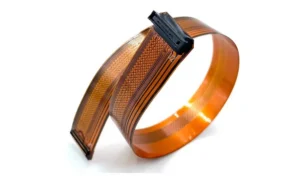
The Foundation: Substrate Materials
At the heart of every flexible PCB lies the substrate—the base material that provides both mechanical support and electrical insulation. Two materials dominate this space: polyimide and polyester.
Polyimide: The Gold Standard
Polyimide stands as the premier substrate material for most high-performance flexible PCB applications. What makes it so special?
- Temperature Resistance: Polyimide can withstand temperatures from -200°C to 400°C, making it ideal for applications exposed to extreme conditions, such as aerospace components or automotive engine controls.
- Dimensional Stability: Even during bending and flexing cycles, polyimide maintains its shape and electrical properties.
- Chemical Resistance: It resists degradation from oils, solvents, and other harsh chemicals.
- Mechanical Strength: Despite being incredibly thin (typically 12.5-50μm), polyimide offers remarkable tensile strength.
These properties make polyimide the go-to choice for dynamic flex applications—circuits that will undergo repeated bending throughout their lifecycle. For example, the flexible display connections in modern smartphones rely on polyimide substrates to withstand thousands of folding cycles without failure.
Polyester: Cost-Effective Alternative
While polyimide dominates high-performance applications, polyester (PET) offers a more economical alternative for less demanding scenarios:
- Lower Cost: Polyester substrates can reduce material costs significantly compared to polyimide.
- Good Electrical Properties: Provides reliable insulation for many consumer electronic applications.
- Limited Temperature Range: Typically suitable for environments between -65°C to 105°C.
Polyester flexible PCBs commonly appear in single-use medical devices, disposable consumer electronics, and applications where the circuit experiences minimal flexing cycles. The beauty tech industry, for instance, often utilizes polyester-based flexible PCBs in devices that require basic functionality at competitive price points.
Conductors: The Pathways for Electrical Performance
While substrates provide the foundation, conductors create the electrical pathways that make flexible PCBs function. Copper reigns supreme in this domain, offering an optimal balance of conductivity, cost, and processing compatibility.
Rolled Annealed Copper: Flexibility Champion
Within the world of flexible PCB copper, rolled annealed (RA) copper stands out for its superior flexibility:
- Enhanced Grain Structure: The rolling process creates a grain structure that resists cracking during bending.
- Higher Purity: RA copper typically contains fewer impurities than other varieties.
- Thickness Options: Available in various weights (measured in ounces per square foot), typically ranging from 1/2 oz to 2 oz.
This specialized copper is crucial for telecommunications equipment where reliable performance is non-negotiable. The optical transceiver modules used in data centers, for example, rely on RA copper’s ability to maintain signal integrity while accommodating the tight bending radii required in these compact devices.
Electrodeposited Copper: The Alternative
While not as flexible as RA copper, electrodeposited (ED) copper offers:
- Lower Cost: Often more economical for less demanding applications
- Good Adhesion: Sometimes provides better adhesion to substrate materials
- Slightly Lower Flexibility: May be suitable for applications with minimal or one-time flexing
The thickness of copper foil significantly impacts a flexible PCB’s bendability—thinner copper allows for tighter bend radii. High-performance designs often use ultra-thin copper (18-35μm) to maximize flexibility while maintaining necessary conductivity.
Adhesives: The Critical Connector
The bond between substrate and conductor layers requires specialized adhesives engineered specifically for flexible circuit applications. These materials must maintain their integrity through thermal cycles, mechanical stress, and environmental challenges.
Acrylic Adhesives
Most commonly used due to their:
- Excellent Flexibility: Maintains adhesion through repeated bending
- Chemical Resistance: Withstands exposure to various chemicals
- Processing Compatibility: Works well with standard manufacturing processes
Epoxy Adhesives
Preferred in certain applications for their:
- Superior Heat Resistance: Better performance in high-temperature environments
- Excellent Dimensional Stability: Minimal shrinkage during curing
- Strong Bonding: Greater adhesion strength in some applications
For medical devices that require biocompatibility, specialized adhesive systems undergo rigorous testing to ensure they won’t release harmful substances. This attention to material selection is crucial for devices that interface directly with human tissue.
Adhesiveless Construction
For the most demanding applications, some flexible PCBs eliminate adhesives entirely:
- Improved Reliability: Removes a potential failure point
- Enhanced Thermal Performance: Better heat dissipation without adhesive layers
- Superior Flexibility: Allows for tighter bend radii
- Thinner Profiles: Enables ultra-thin designs critical for miniaturized applications
This construction method is particularly valuable in sophisticated medical implants and aerospace applications where absolute reliability is essential.
Protective Layers: Defending Circuit Integrity
Flexible PCBs operate in challenging environments and require protection from mechanical damage, environmental factors, and electrical interference.
Coverlay Films
These polyimide or polyester films provide mechanical and environmental protection:
- Matching Substrate Material: Often made from the same material as the substrate for compatible thermal expansion
- Precise Openings: Custom-created apertures allow access to connection points
- Excellent Insulation: Prevents short circuits between traces
- Abrasion Resistance: Protects delicate copper traces from physical damage
Coverlays are particularly important in wearable technology, where flexible PCBs must withstand the rigors of daily use while maintaining reliable electrical connections.
Solder Masks
While less common than in rigid PCBs, specialized flexible solder masks can:
- Control Solder Flow: Prevent solder bridges during assembly
- Provide Insulation: Additional electrical protection
- Offer Visual Contrast: Aid in inspection and assembly
Stiffeners
Strategic reinforcement materials add rigidity to specific areas of flexible PCBs:
- Connector Support: Reinforce connection areas that experience mechanical stress
- Component Mounting: Provide stability for component placement
- Material Options: FR4, polyimide, metal, or specialized plastics depending on application requirements
Stiffeners are essential in smart helmet designs, where flexible PCBs must transition between rigid areas housing sensors and displays to flexible sections that contour to the helmet’s shape.
Testing and Standards: Ensuring Performance and Reliability
The demanding applications of flexible PCBs necessitate rigorous testing protocols and adherence to industry standards, with IPC standards forming the backbone of quality assurance.
IPC-6013: The Flexible Circuit Bible
This specification covers qualification and performance requirements for flexible PCBs, including:
- Bend Testing: Evaluating performance through repeated flex cycles
- Adhesion Testing: Measuring the bond strength between layers
- Environmental Testing: Assessing performance under temperature extremes, humidity, and other conditions
- Electrical Performance: Verifying continuity, insulation resistance, and other electrical parameters
Application-Specific Standards
Various industries impose additional requirements:
- Medical Devices (ISO 13485): Ensures quality management systems for medical device manufacturing
- Automotive (IATF 16949): Specialized requirements for automotive applications, including vibration resistance and extended temperature ranges
- Aerospace (AS9100): Stringent reliability standards for mission-critical applications
For low-altitude airspace applications like drones and eVTOL vehicles, flexible PCBs must pass specialized testing for vibration resistance, thermal cycling, and altitude performance. These tests ensure reliability in the challenging conditions these devices encounter.
The Future of Flexible PCB Materials
As technology advances, flexible PCB materials continue to evolve, with several exciting developments on the horizon:
- Stretchable Circuits: Beyond merely flexible, new TPU (Thermoplastic Polyurethane) circuits can stretch and recover, opening new possibilities for wearable technology and medical devices.
- Ultra-Thin Designs: Pushing the boundaries of miniaturization with overall thicknesses as thin as 25 microns for double-sided flex PCBs.
- Advanced Heat Management: Innovative solutions like flexible heat dissipation flow channels to address thermal challenges in compact designs.
- Environmentally Friendly Materials: Sustainable alternatives with reduced environmental impact throughout their lifecycle.
Conclusion: Material Science Driving Innovation
The hidden science of flexible PCB materials enables the technological marvels we take for granted every day. From the polyimide substrates that withstand extreme conditions to the precisely engineered copper conductors that carry signals reliably through thousands of flex cycles, these materials represent the culmination of decades of materials science innovation.
Understanding these materials is crucial for designers and engineers pushing the boundaries of what’s possible in electronic devices. As electronic products continue to become smaller, more powerful, and more flexible, the importance of advanced flexible PCB materials will only grow.
At Flex Plus, we believe that certified excellence in flexible PCB manufacturing forms the foundation for technological advancement. Our commitment to rigorous quality standards—including ISO 9001, ISO 13485, and IATF 16949—ensures that our flexible circuit solutions meet the exacting requirements of diverse industries from medical devices to aerospace.
With complete manufacturing control and advanced capabilities like flexible COB technology, we’re helping customers around the world bring innovative products to market that were once thought impossible. As technology evolves, the materials science behind flexible PCBs will continue to be the hidden hero enabling the devices that shape our future.