
In today’s world of ever-shrinking electronic devices, a quiet revolution is taking place at the microscopic level. Flexible Chip-on-Board (COB) technology is fundamentally transforming how we design, manufacture, and use electronics across industries. This innovative approach, which directly mounts bare semiconductor chips onto flexible circuit boards, eliminates traditional packaging constraints and opens new frontiers for product development.
Flexible COB solutions represent the convergence of two powerful technologies: bare die integration and flexible substrate manufacturing. By embedding chips directly onto bendable polyimide substrates, manufacturers can create electronic systems that are not only incredibly thin and lightweight but also capable of conforming to non-planar surfaces. This marks a significant departure from conventional rigid electronics, enabling devices to be integrated into spaces and forms previously considered impossible.
The impact of this technology extends far beyond mere miniaturization. Flexible COB solutions deliver enhanced reliability by reducing connection points – often the most common failure locations in electronic assemblies. The direct integration of chips eliminates wire bonds and traditional packaging, resulting in more robust electronic systems capable of withstanding mechanical stress, vibration, and thermal cycling. For industries where reliability is paramount, such as aerospace and medical devices, this represents a game-changing advancement.
Technical Framework: Building on Bendable Foundations
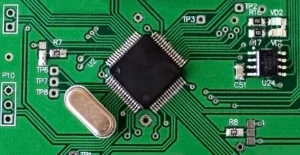
The technical framework behind flexible chip-on-board solutions revolves around lightweight, heat-resistant substrates – with polyimide emerging as the material of choice. Polyimide offers exceptional thermal stability, withstanding temperatures up to 400°C during processing while maintaining dimensional stability. This heat resistance is crucial during the die bonding and encapsulation phases of COB manufacturing.
Beyond thermal properties, polyimide substrates provide outstanding mechanical flexibility, allowing circuits to bend repeatedly without fatigue failure. With a thickness that can be as thin as 12.5 microns (about one-eighth the thickness of a human hair), these substrates enable ultra-thin electronic assemblies while maintaining excellent electrical insulation properties. The material’s inherent chemical resistance further protects the embedded chips from environmental factors that could otherwise compromise performance.
Recent advances in integration techniques have dramatically improved the robustness of flexible COB connections. Industry leaders like Flex Plus have developed proprietary magnetic fixture technologies that solve the longstanding challenge of uneven flexible substrates during the die attachment process. This innovation ensures stability and consistency in COB processing, with die bonding precision controlled within remarkably tight tolerances – wafer offset angle tolerance within ±5°, far exceeding industry standards.
The encapsulation process has similarly evolved, with micron-level precision packaging that controls COB and encapsulation thickness tolerance within 50-100μm (±25-50μm). Ultra-fine dam processes achieve encapsulation thickness tolerances as precise as ±5μm, representing the ultimate in precision packaging. These technical advancements ensure that flexible COB solutions deliver not just the benefits of miniaturization, but also the reliability essential for mission-critical applications.
Diverse Applications Across Industries
The versatility of flexible chip-on-board solutions has led to rapid adoption across multiple sectors, each leveraging the technology’s unique capabilities to address specific challenges.
In electric vehicles, where weight reduction directly impacts energy efficiency and range, flexible COB solutions have found numerous applications. From Head-Up Displays and side CMS cameras to parking sensors and Lidar systems, these lightweight integrated circuits help automotive manufacturers reduce vehicle weight while enhancing functionality. The technology’s resistance to vibration makes it particularly valuable in the harsh operating environment of vehicles.
The medical device industry has embraced flexible COB technology for its ability to create ultra-compact, biocompatible electronics. Implantable devices benefit from the reduced size and enhanced reliability, while wearable health monitors leverage the technology’s flexibility to improve patient comfort. Data shows that medical procedures utilizing COB LED lighting can reduce operating times by up to 15%, thanks to superior visibility and color rendering – a clear demonstration of how this technology improves outcomes in healthcare settings.
Consumer electronics manufacturers have perhaps been the most enthusiastic adopters, incorporating flexible COB solutions into smartphones, wearables, and AR devices. The technology enables thinner product profiles and innovative form factors while improving durability – a combination previously unattainable with conventional electronics. As consumers demand increasingly sophisticated features in ever-smaller packages, flexible COB technology has become essential to meeting these expectations.
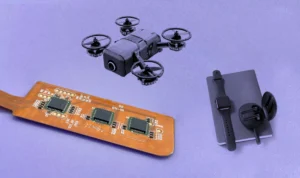
In the rapidly growing low-altitude airspace sector, including drones and eVTOL (Electric Vertical Takeoff and Landing) vehicles, the weight savings and reliability advantages of flexible COB solutions are particularly valuable. Every gram saved in these applications translates to extended flight time or increased payload capacity, making the technology a natural fit for aerial innovation.
The aerospace industry has similarly recognized the benefits, incorporating flexible COB technology into satellites and avionics systems where the combination of lightweight construction, resistance to radiation, and reliability under extreme conditions provides clear advantages over traditional electronics.
The Compelling Advantages of Adoption
The case for adopting flexible chip-on-board solutions becomes increasingly compelling when examining the specific advantages across different dimensions of product development and manufacturing.
From a cost perspective, flexible COB technology delivers significant savings throughout the product lifecycle. While the initial material costs may be comparable to traditional approaches, the elimination of separate packaging components and reduced assembly complexity translate to lower overall production costs. The smaller footprint of COB solutions often means more circuits per panel during manufacturing, improving yield rates and further reducing costs at scale.
Performance enhancements represent another major advantage. The direct die attachment method eliminates the electrical parasitics associated with traditional packaging, resulting in improved signal integrity and reduced power consumption. Thermal management is similarly enhanced, as chips mounted directly on substrates can dissipate heat more efficiently. These performance gains are particularly valuable in high-frequency applications and battery-powered devices where energy efficiency directly impacts user experience.
Design flexibility may be the most transformative advantage. Engineers using flexible COB technology can create electronic systems that conform to available space rather than designing products around rigid circuit boards. This paradigm shift enables entirely new product categories and form factors. In beauty tech devices and wearable technology, where ergonomics and aesthetics are paramount, this flexibility allows electronics to follow human contours rather than forcing compromises in industrial design.
The reliability improvements are equally significant. By reducing connection points – often the weakest links in electronic assemblies – flexible COB solutions demonstrate superior durability under mechanical stress and environmental challenges. This translates to lower failure rates, reduced warranty claims, and enhanced customer satisfaction. For industrial control systems and telecommunications equipment operating in demanding environments, this reliability advantage can be the deciding factor in technology selection.
The Future of Electronic Integration
Looking ahead, flexible chip-on-board technology stands at the forefront of electronic packaging innovation, with continued advancements promising even greater capabilities. As semiconductor manufacturers push toward smaller process nodes and increased functionality, flexible COB solutions provide the ideal platform for integrating these advanced chips into next-generation products.
The ongoing development of stretchable electronics, building on flexible COB foundations, will enable entirely new applications in areas ranging from conformable medical sensors to soft robotics. Combined with emerging technologies like printed electronics and advanced materials such as TPU circuits, flexible COB solutions are paving the way for electronics that seamlessly integrate with organic shapes and dynamic environments.
Companies like Flex Plus (Xiamen) Co., Ltd are leading this technological evolution, leveraging over two decades of experience in flexible PCB manufacturing to advance the state of the art in chip-on-board integration. With specialized facilities and proprietary processes developed specifically for flexible COB manufacturing, Flex Plus exemplifies the commitment to excellence and innovation that drives progress in this field.
The company’s philosophy of certified excellence ensures that these advanced technologies meet the highest international standards, including ISO 9001, ISO 13485, and IATF 16949 certifications that validate quality and consistency. This commitment extends to environmental responsibility through ISO 14001 certification, recognizing that tomorrow’s electronics must be developed with sustainability in mind.
As a global leader in flexible circuit and COB integration technology, Flex Plus provides not just manufacturing services but comprehensive partnerships that include technology consultation, joint development initiatives, and full-process support from design through production. This collaborative approach helps customers transition from traditional packaging to advanced flexible COB solutions, accelerating innovation across industries.
The tiny revolution of flexible chip-on-board technology is reshaping electronics as we know them, enabling devices that are smaller, lighter, more reliable, and capable of conforming to our world rather than forcing conformity upon it. As this technology continues to mature and evolve, it will undoubtedly unlock new possibilities that we can scarcely imagine today – continuing the remarkable journey of electronics from room-sized computers to seamless, invisible integration in the fabric of everyday life.